
Index
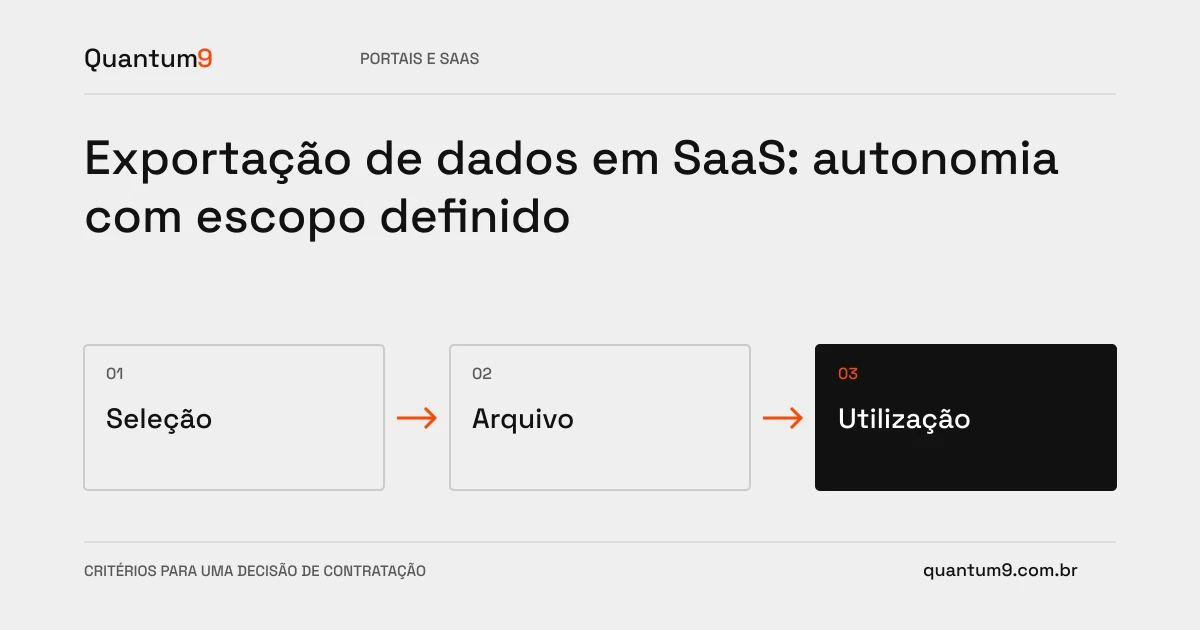
An export function must deliver understandable and authoritative data, not just a bulky file. The contract needs to define content, format and operational limits to meet the customer's needs.
How to evaluate this decision
Identify who requests it, which records belong to the organization, and how relationships will be represented. Consider attachments, calculated fields, and historical data. Large exports may require asynchronous processing and temporary access to the result. Define validity, traceability, and error handling without exposing information from other accounts.
Criteria for comparing proposals
- Content: list entities, filters and information that are not included in the export.
- Format: preserve identifiers and explain relationships so that the file can be used.
- Operation: limit execution according to capacity and report progress or completion.
A scenario to discuss with the supplier
Hypothetical example: the customer receives orders in a spreadsheet, but without identifying the items or linking them with their customers. The file exists, but it does not serve the purpose of analyzing or migrating the operation.
What to validate upon delivery
Export a controlled base and rebuild important relationships based on the results. Test permissions, characters, dates, volume, and file access expiration.
Prepare the conversation about the project
Bring expected data usage and volumes to Quantum9. The proposal must define functional and verifiable export, with sufficient documentation to avoid dependence on manual interpretation for each request.
Development of portals · Map the company's priority