
Index
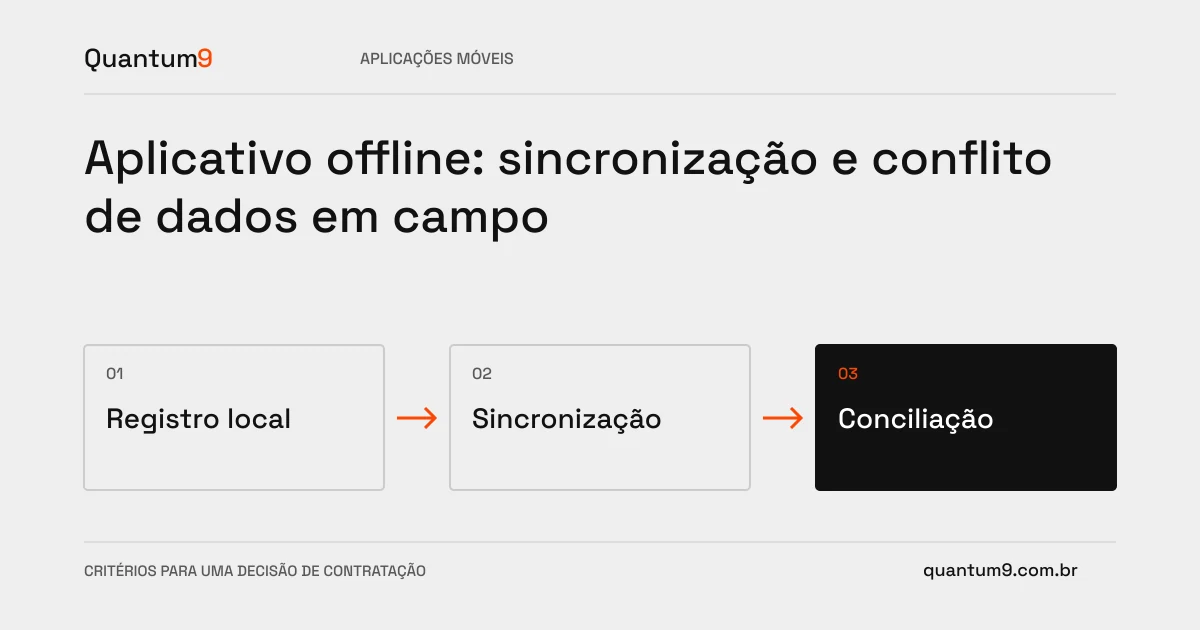
An offline application needs to define what happens when two people change the same record offline. Saving information on the device is just one part of the business continuity problem.
How to evaluate this decision
Separate data that can be consulted, created and changed offline. Define local validity, volume and treatment of sensitive information. When synchronizing, the last change received is not always the correct one: a change of person responsible may conflict with the closure of a task. Each data type needs an understandable rule for human reconciliation or review.
Criteria for comparing proposals
- Local queue: Show saved, pending, sent, and declined items without presenting a local recording as server confirmation.
- Conflicts: preserve the relevant versions and explain who can resolve the disagreement.
- Continuity: test for lack of space, application termination, loss of connection, and repeated sending.
A scenario to discuss with the supplier
Hypothetical example: a technician completes an inspection offline while the supervisor cancels the order. When reconnecting, the system should preserve the evidence and forward the conflict, rather than silently erasing one of the actions.
What to validate upon delivery
Homolog alternating periods with and without network on representative devices. Compare the local history with the server and check that repeating the sending does not duplicate records. Also test recovery after an abrupt interruption.
Prepare the conversation about the project
Inform Quantum9 of typical signal-free duration, number of records, devices and actions allowed in the field. The budget must explain conflict rules, local security and offline operation limits.
Tailor-made development · Map the company's priority