
Index
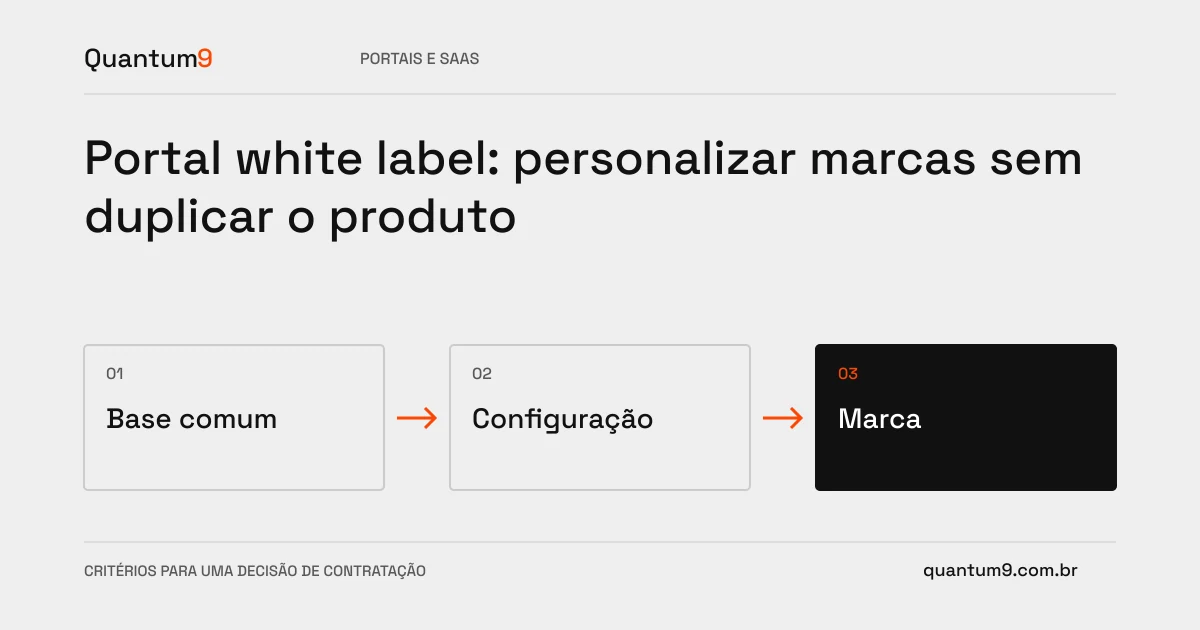
A white label portal needs to distinguish commercial customization from functional change. Copying the code for each customer can speed up the first delivery and multiply the maintenance cost in subsequent deliveries.
How to evaluate this decision
Define what can vary: brand, domain, content, resources and rules. Separate configuration from specific development and establish clear limits for supported combinations. Isolation between clients must exist in authorization and data, regardless of appearance. Shared changes need validation in scenarios representative of all relevant configurations.
Criteria for comparing proposals
- Configuration: establish allowed values and a recovery pattern for invalid options.
- Domain: plan authentication, links and messages on the correct identity of each client.
- Evolution: defining which changes go into the common product and which require additional scope.
A scenario to discuss with the supplier
Hypothetical example: a customer changes the main color to a tone that impairs reading. The configuration needs to preserve contrast and interface states, rather than applying any value across all components.
What to validate upon delivery
Test two organizations with different brands and permissions. Check domain changes, access links and absence of cross-data, in addition to visual consistency.
Prepare the conversation about the project
Bring to Quantum9 commercial variations and expected limits. The project must deliver a configurable and sustainable base, with explicit customization costs before selling new versions.
Development of portals · Map the company's priority