
Index
When multiple people use the same device, the application needs to separate identity, session and local data. Leaving everyone working on a common account undermines the traceability of actions and access administration.
How to evaluate this decision
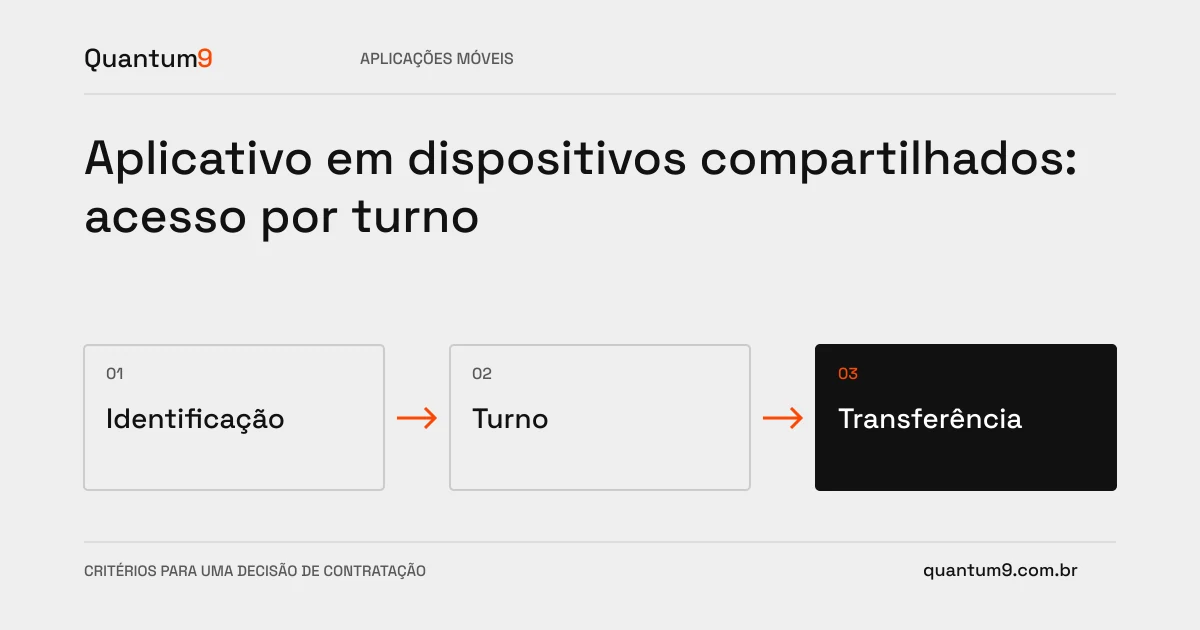
Define how the user starts and ends the shift, what information is available and what happens to pending tasks. Person switching should not expose data from the previous session. At the same time, indiscriminately erasing storage can eliminate records that have not yet been synchronized. The outflow needs to balance privacy, continuity and operational responsibility.
Criteria for comparing proposals
- Identity: associate actions with the authenticated person and the context of the operation, without relying solely on the device identifier.
- Shift Swapping: Handle open tasks, pending uploads, and offline registrations with explicit rules.
- Administration: predict device loss, access revocation and authorized recovery.
A scenario to discuss with the supplier
Hypothetical example: a collector passes to another operator before sending a count. The application must inform the pending issue and preserve authorship, without assigning the work to the next user.
What to validate upon delivery
Test switching between people, session expired, device restart and access revocation. Check both the interface and the server logs. Hiding a screen does not guarantee isolation of stored data.
Prepare the conversation about the project
To design the solution with Quantum9, inform the number of devices, shifts, connectivity and identification method available. Include who manages the fleet and who can resolve issues between sessions.
Tailor-made development · Map the company's priority