
Index
Internal requests sent via messages are lost when no one can identify the person responsible, deadline or next step. A workflow must make the passage between areas explicit and retrievable.
How to evaluate this decision
Sort requests by expected result and required information. Avoid a single form with dozens of irrelevant fields. Define conditions for accepting, returning, forwarding and closing the order. The deadline needs to indicate what is being measured and how a wait for the requester affects follow-up, without hiding delays through arbitrary status changes.
Criteria for comparing proposals
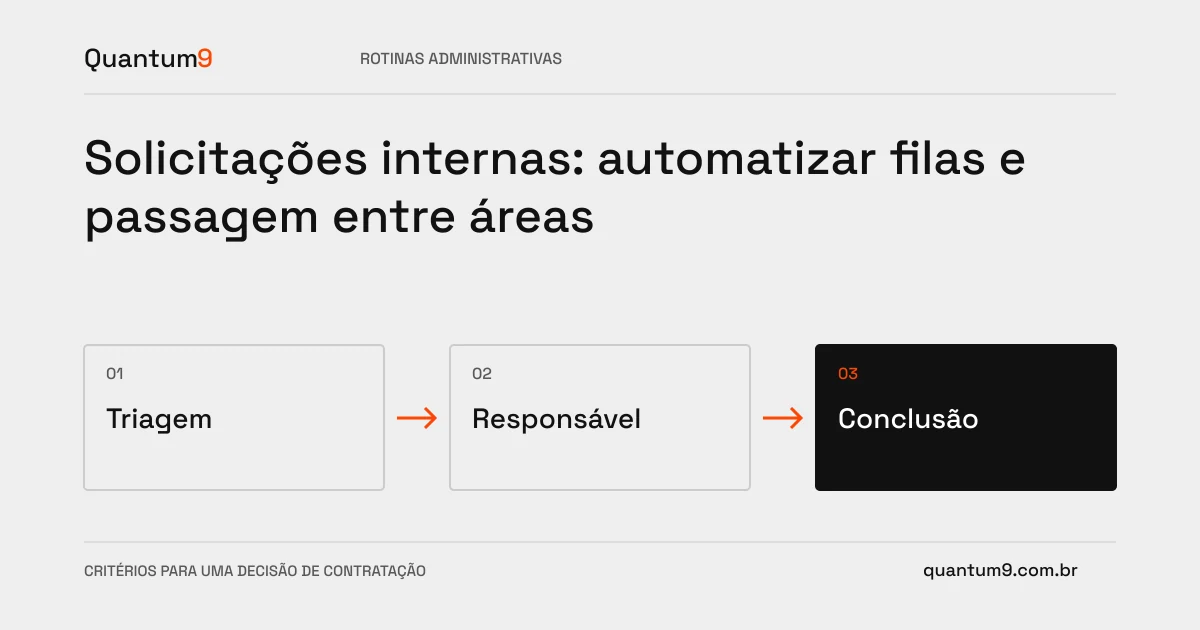
- Triage: identify category, justified urgency and initial person responsible, with an alternative for incomplete requests.
- Passage: record who delivered, who received and what information is still missing.
- Visibility: allow the requester to monitor the status without accessing internal data that does not belong to him.
A scenario to discuss with the supplier
Hypothetical example: A request depends on purchasing and technology. Closing it when purchasing ends leaves the facility without an owner. The flow must distinguish completed steps from the final result delivered.
What to validate upon delivery
Go through a request with return and exchange of area. Check notifications, history and pending reports. Check whether closure requires the evidence defined for that type of order.
Prepare the conversation about the project
To define the solution with Quantum9, select frequent categories, describe those responsible and gather examples of requests that were stuck. Deployment can start with a complete flow before covering all areas.
Process automation · Map the company's priority