
Index
A change in bank details can have greater consequences than an incomplete registration. The digital flow must separate ordering, verification and release for use, with clear responsibilities.
How to evaluate this decision
Define who can request the change and how the organization confirms its legitimacy. The system can organize evidence and approvals, but the means of confirmation must be chosen by the company. Avoid exclusively using the new data provided in the order itself to validate the change. Integrate the approved version into the official registry without deleting the previous one.
Criteria for comparing proposals
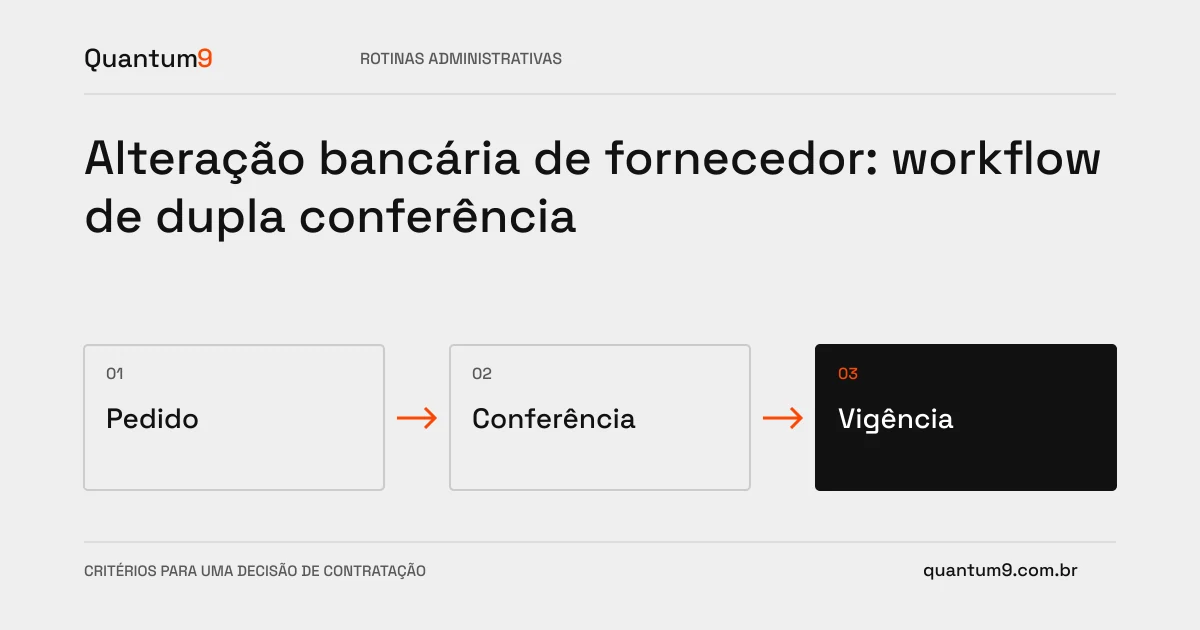
- Request: record origin, reason and changed fields, restricting access to the documents involved.
- Conference: require different roles when policy determines and prevents approval by the person requesting it.
- Publication: control validity, communication to finance and confirmation of update in the target system.
A scenario to discuss with the supplier
Hypothetical example: a supplier requests a change of account shortly before a payment. The flow must make the pending change visible and prevent a request that has not yet been verified from being used as an approved record.
What to validate upon delivery
Simulate repeat request, rejection, approval due to inappropriate paper and onboarding failure. Check if you can explain which version was valid at the time of each operation.
Prepare the conversation about the project
Quantum9 can implement the workflow according to the controls defined by the company. Bring the conference policy, systems involved and responsible for authorizing the change; the software does not override this operational definition.
Process automation · Map the company's priority