
Index
Automating refunds requires more than receiving a photo and forwarding a payment. The solution must apply company policy, identify pending issues and preserve the decision of those who approve.
How to evaluate this decision
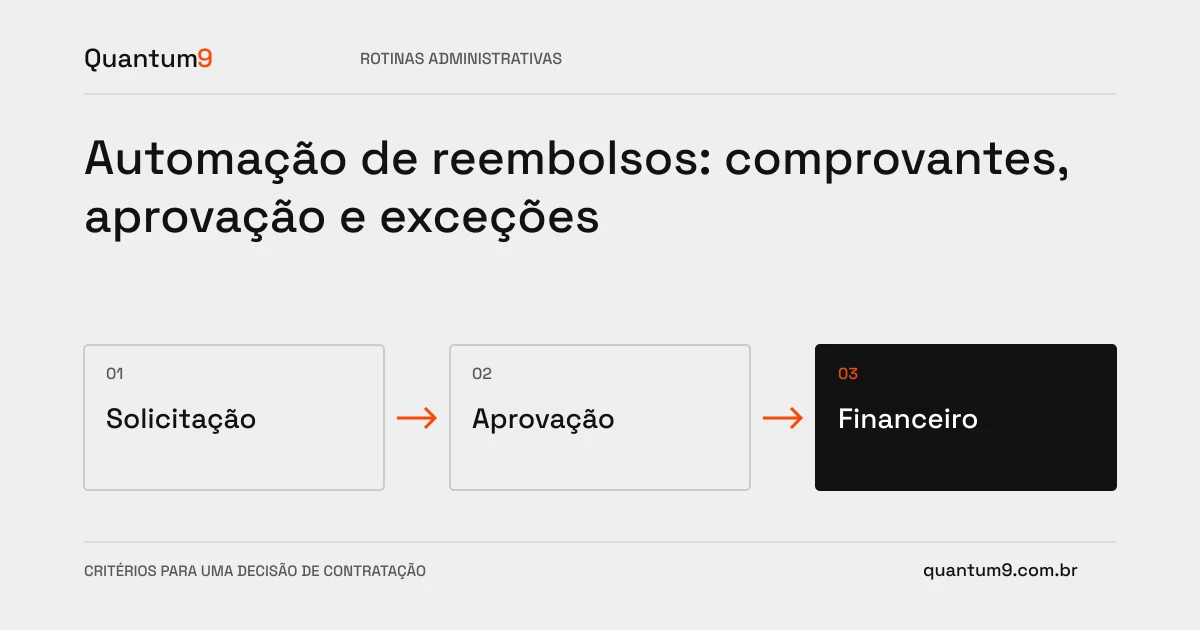
Separate request, checking, approval and sending to finance. Document limits by category, advances, shared expenses and situations without proof. A tool can flag inconsistencies, but it must not invent justifications or approve exceptions that depend on human decision. The policy needs to be provided and validated by the organization before becoming a software rule.
Criteria for comparing proposals
- Input: link voucher, requestor, cost center and purpose, with illegible file treatment.
- Decision: record approval, return and authorized exception without overwriting the history.
- Integration: differentiating approved expenses from payments actually confirmed by the financial system.
A scenario to discuss with the supplier
Hypothetical example: a person sends the same expense again because they did not receive a return. The automation must flag possible duplication and show the status of the request, without automatically eliminating a similar legitimate record.
What to validate upon delivery
Test valid, over-limit, undocumented, and possibly duplicate expenses. Check that a return does not trigger payment and that the reopening keeps the previous decision consultable.
Prepare the conversation about the project
Inform Quantum9 of the current policy, approvers, volume and financial system. The first step can cover an expense category, with explicit exceptions and reconciliation before expansion.
Process automation · Map the company's priority