
Index
Rooms, vehicles and equipment have different restrictions. A reservation system needs to check all necessary resources and prevent simultaneous commits from producing conflicts.
How to evaluate this decision
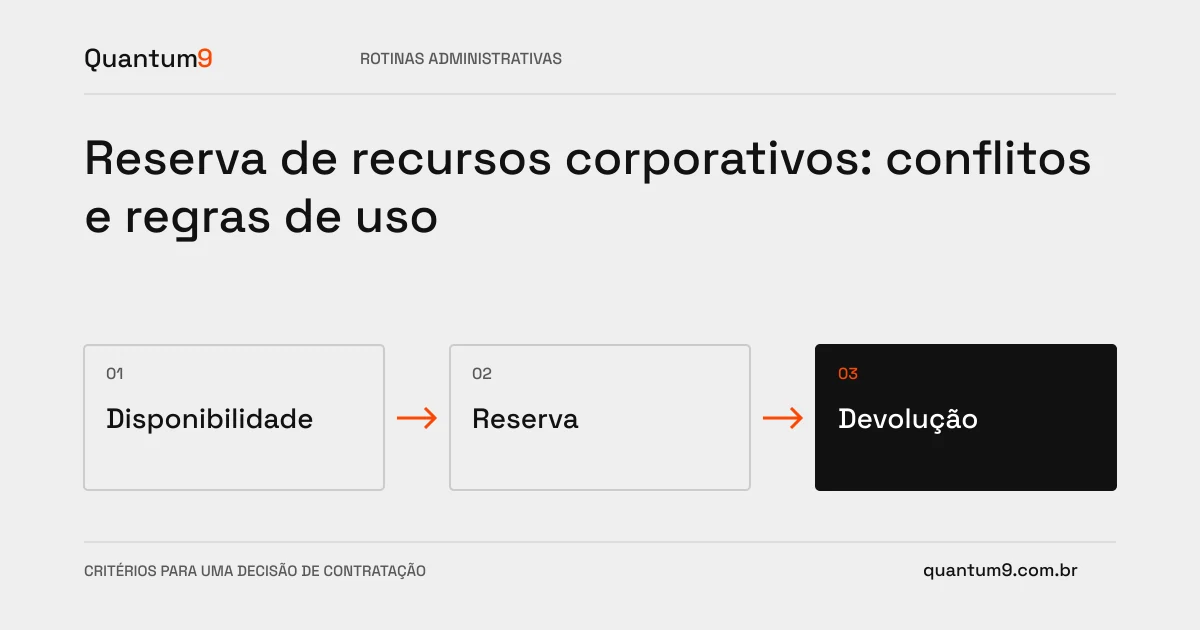
Model availability, preparation, maintenance and returns. An apparently free resource may be blocked by cleaning or inspection. Define request and confirmation states, as well as priority and cancellation. When two people try to book the same slot, consistency needs to be ensured across the server, not just the displayed calendar.
Criteria for comparing proposals
- Rules: inform minimum duration, advance notice, interval between uses and authorized people.
- Conflicts: deal with competing reservations, deadline extensions and unavailability registered after confirmation.
- Operation: link withdrawal, return and occurrence when the resource requires physical control.
A scenario to discuss with the supplier
Hypothetical example: a vehicle returns with a breakdown and already has another reservation. The maintenance block should generate an operational backlog and communicate the impact, rather than maintaining the schedule as if the resource were available.
What to validate upon delivery
Test concurrent requests and changes over existing buckets. Check zone, time limits and permissions. The demonstration must include a failed reservation and the alternative offered to the user.
Prepare the conversation about the project
Quantum9 can structure the reservation flow according to resources, units and those responsible. Bring usage policies, conflict situations, and necessary integrations before defining the scope of the calendar.
Process automation · Map the company's priority