
Index
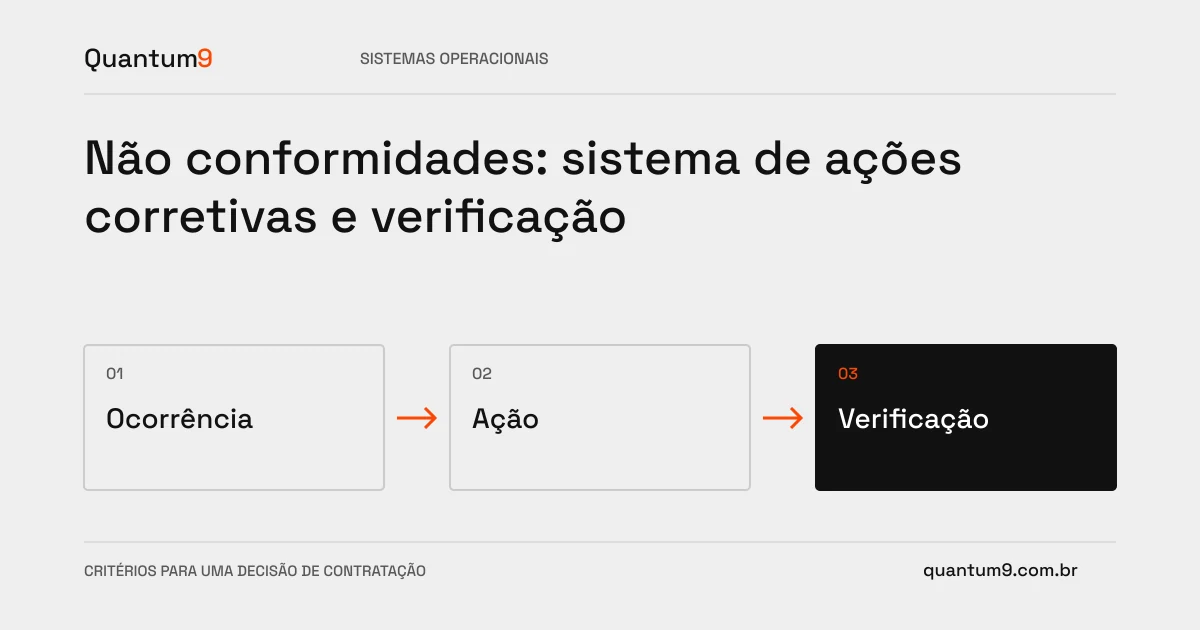
Registering a non-conformity is different from resolving its cause. A quality system needs to track containment, action and verification, avoiding closures based solely on a task marked as done.
How to evaluate this decision
Define categories, responsible parties and analysis criteria according to the company's process. Relate repeated occurrences without erasing their particularities. An action may treat the immediate effect and leave the cause pending; the flow should show this difference. The software organizes evidence, but should not declare certification or compliance with standards without specific evaluation.
Criteria for comparing proposals
- Record: describe occurrence, context and evidence with adequate access.
- Treatment: separate containment, investigation and action, with specific deadlines and responsible parties.
- Verification: record how effectiveness will be observed and who authorizes closure.
A scenario to discuss with the supplier
Hypothetical example: Correcting a label resolves an item, but not the source of the wrong labels. The process must accompany the correction of the rule and a subsequent conference before closing the case.
What to validate upon delivery
Test repeat occurrence, delayed action and verification that fails the solution. Check if the system allows you to reopen the treatment while preserving previous decisions.
Prepare the conversation about the project
Quantum9 can digitize the flow defined by the quality area. Present necessary forms, categories, review rules and reports, without assuming that the tool alone proves regulatory compliance.
Tailor-made systems · Map the company's priority