
Index
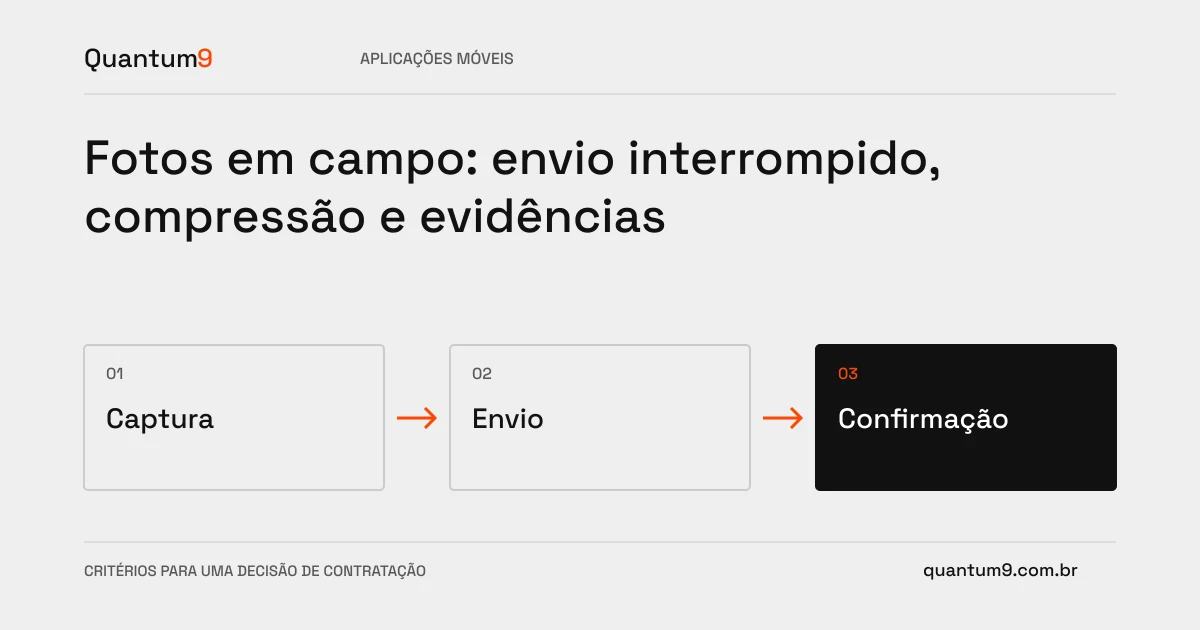
Photos can be part of proving a service, but unstable connections make uploading a critical step. The application needs to show what was captured, sent and confirmed on the server.
How to evaluate this decision
Set the quality required for the purpose of the image before compressing. A thumbnail useful for navigation may not preserve details required in the conference. Separate original, preview and metadata when necessary. Plan for resumption of uploads, local storage limits, and correct association between photo and task, including canceling or changing registration during submission.
Criteria for comparing proposals
- Capture: guide framing and quality, dealing with denied permission and lack of space.
- Transport: Recover interrupts without duplicating attachments and without declaring success before committing.
- Consultation: restrict access and clearly present pending, unavailable or removed images according to the defined rule.
A scenario to discuss with the supplier
Hypothetical example: A technician captures several images and closes the application before completing the upload. When returning, the queue must continue or inform exactly what needs to be resent, preserving the link with the inspection.
What to validate upon delivery
Test large files, network intermittent, application termination, and request retry. Check readability of the final image and consistency between local quantity and confirmed attachments.
Prepare the conversation about the project
Take examples of photos, purpose of evidence, volume and connectivity to Quantum9. The scope must treat quality, retention, access, and failure recovery as part of the same journey.
Tailor-made development · Map the company's priority