
Index
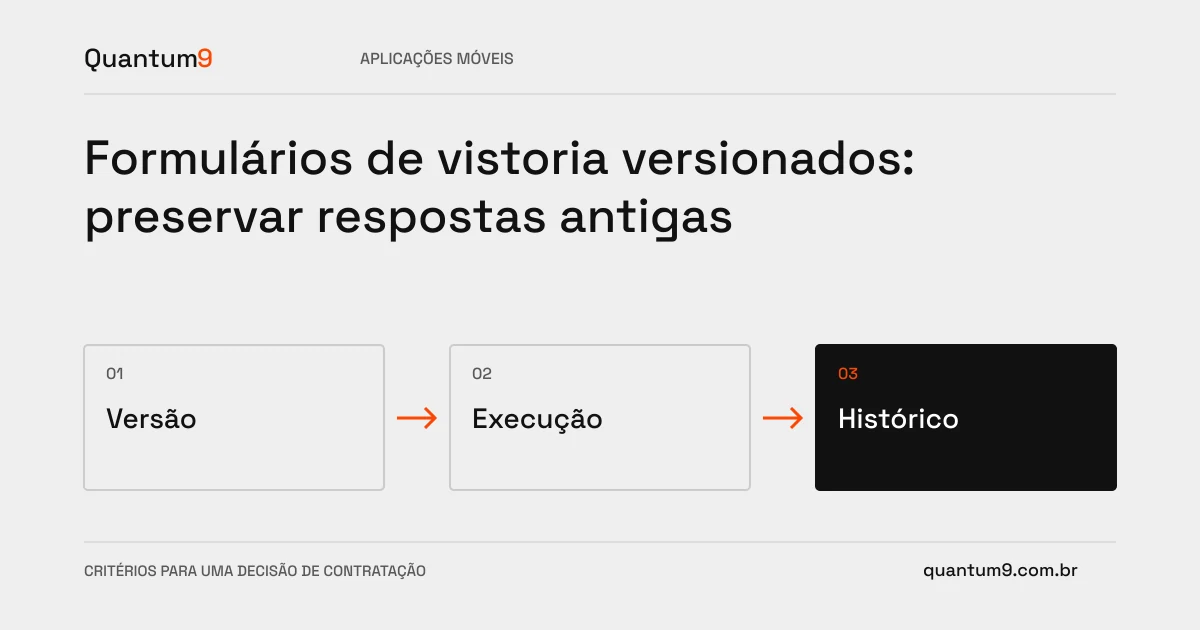
Changing an inspection form should not change the meaning of responses already recorded. Versioning allows you to evolve questions and criteria without rewriting historical evidence.
How to evaluate this decision
Associate each inspection with the version of the form used in the execution. Differentiate text adjustments from changes that alter interpretation, obligation or calculation. Define when a new version becomes effective and how to handle work in progress. If the survey works offline, the system also needs to check which version was available on the device.
Criteria for comparing proposals
- Publication: separate draft, review and released version, with responsible person identified.
- History: preserve questions, alternatives and rules necessary to interpret an old answer.
- Transition: deciding whether a started inspection continues in the previous version or requires an authorized restart.
A scenario to discuss with the supplier
Hypothetical example: a question changes from free response to a scale. Reports cannot directly compare the two formats as if they were the same measurement. The version needs to accompany the analysis.
What to validate upon delivery
Create a review, publish another version and check if the first one is still reproducible. Test offline resumption and historical export. A correctly updated screen does not prove that old records retained their context.
Prepare the conversation about the project
Quantum9 can design the form editing and publishing cycle. Bring examples, frequency of changes, review rules and historical consultation needs to define the first delivery.
Tailor-made development · Map the company's priority