
Index
A folder of documents alone does not inform which powers remain in force or who needs to review a power of attorney. An internal system can organize registration and consultation according to rules validated by the company.
How to evaluate this decision
Separate document, represented person, authorized person, registered scope and change events. The legal interpretation must remain with the competent person; the software records the approved data and makes it queryable. Define access by purpose and avoid exposing personal documents to the entire organization. Revocation and replacement must have evidence and date recorded.
Criteria for comparing proposals
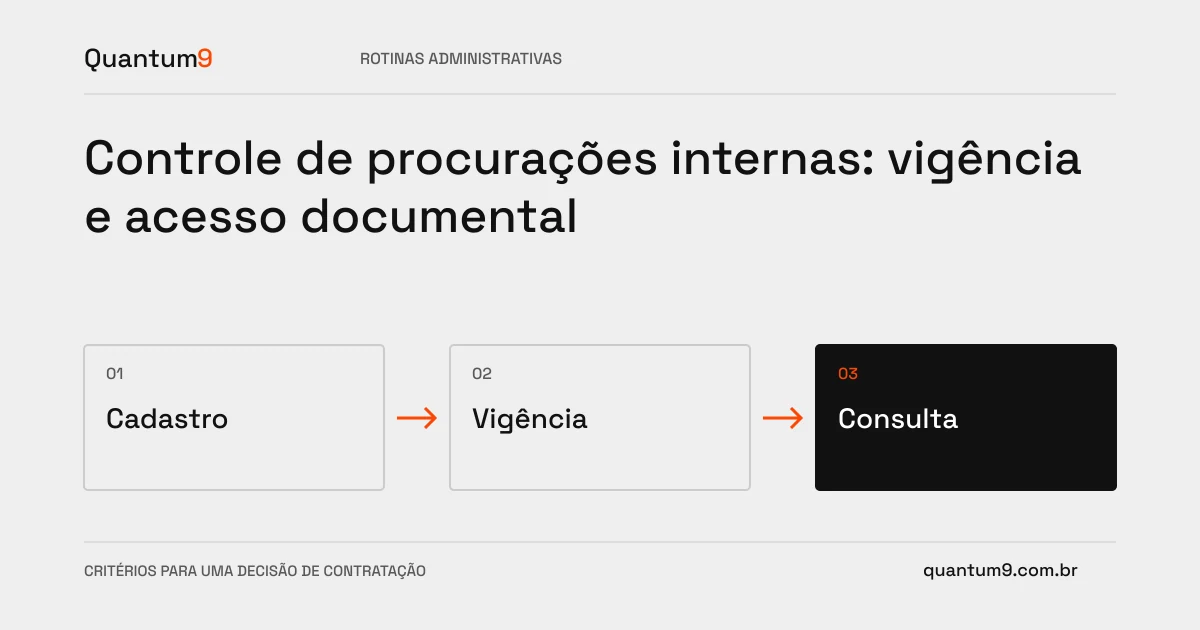
- Registration: define mandatory fields, person responsible for checking and link with the corresponding document.
- Query: show status and version clearly, without presenting an old file as current authorization.
- Review: generate pending validity and record closure or authorized replacement.
A scenario to discuss with the supplier
Hypothetical example: a power of attorney is replaced before expiration. Whoever consults must find the current version and understand that the previous document has been closed, keeping the history only for authorized people.
What to validate upon delivery
Test consultation for different papers, replacement and documents with incomplete registration. Check that an unvalidated date does not automatically produce a declaration of legal validity.
Prepare the conversation about the project
Quantum9 can implement document control and its workflow. Bring the approved classification, those responsible for validating information and the access and retention rules that the system must comply with.
Process automation · Map the company's priority