
Index
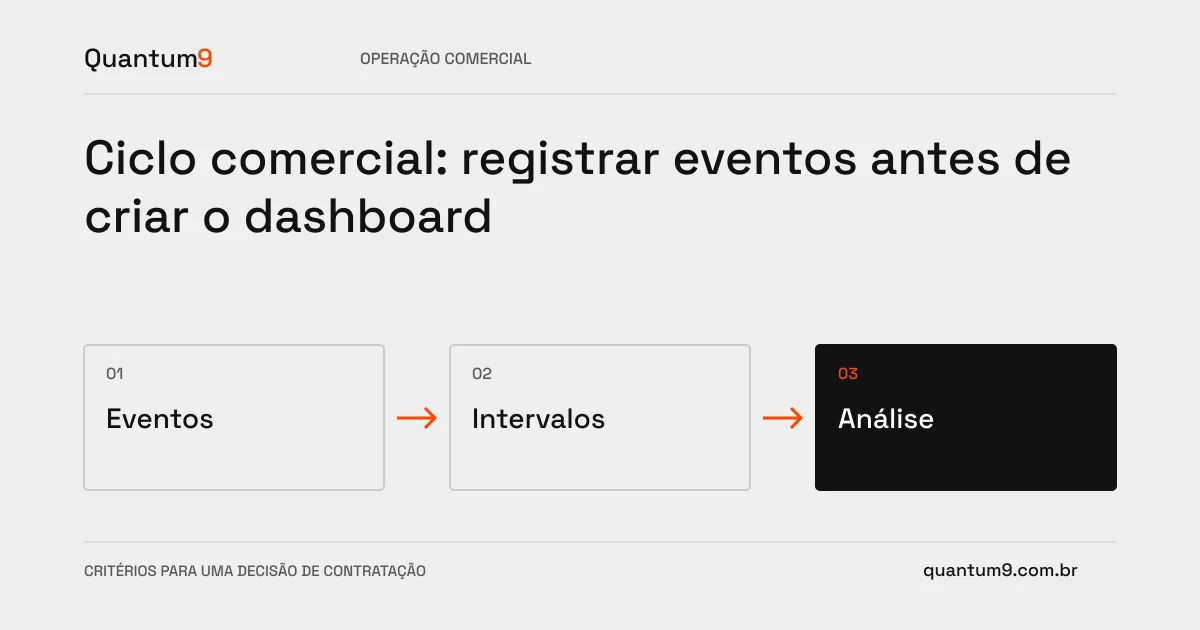
Sales time depends on well-recorded events. A dashboard does not correct steps without a date, retroactive changes or opportunities closed without a defined result.
How to evaluate this decision
Choose the start and end of the measure according to the business question. Time since first contact is different from time since qualification. Preserve transition history to observe reopenings and returns. Separate open from completed opportunities: Comparing the age of a queue to the duration of won sales mixes different populations.
Criteria for comparing proposals
- Events: record entry, stage change and completion with consistent origin and moment.
- Rules: set pauses, reopens and retroactive fixes without erasing history.
- Reading: segment by offer, channel or profile when comparing different cycles would be misleading.
A scenario to discuss with the supplier
Hypothetical example: an old negotiation is reopened for another project. Reusing the same record without distinguishing the new cycle makes it look like the current sale took years. The reopening rule needs to be defined.
What to validate upon delivery
Manually reconstruct some opportunities and compare the ranges with the report. Check undated records and declare gaps before using the indicator for targets or forecasting.
Prepare the conversation about the project
Quantum9 can review CRM instrumentation and analytical model. Inform the decision that the indicator should support, the current steps and how the team records changes in the funnel.
CRM and retention · Map the company's priority