
Index
A lead journey doesn’t end when a form arrives in the CRM. Marketing and sales need to agree on the necessary context, who is responsible for acceptance and the reason for a possible return.
How to evaluate this decision
Define referral criteria by offer, profile and evidence of interest. Avoid using a score as a substitute for basic demand information. The salesperson needs to record whether they received, initiated contact or returned the lead. The return must provide a usable cause to improve the origin, without transforming every lack of response into a lack of quality.
Criteria for comparing proposals
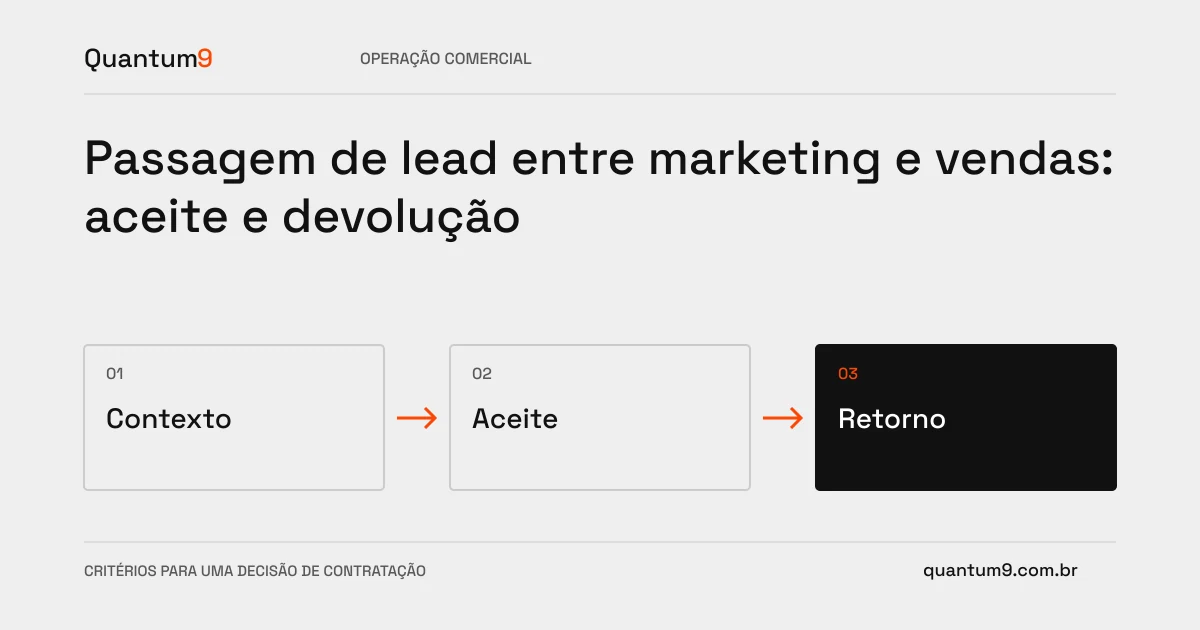
- Context: convey offer, origin, message and consents or preferences applicable to the contact.
- Accept: define operational deadline, responsible and alternative when the queue is without coverage.
- Return: standardize reasons for returns and separate inadequacy of profile from service failure.
A scenario to discuss with the supplier
Hypothetical example: a technical request is forwarded as interest in another offer because all pages use the same form without context. The integration must preserve the page and service related to the submission.
What to validate upon delivery
Make test contacts on different channels and track their arrival to the correct team. Check that a return updates the history and does not create another unlinked lead.
Prepare the conversation about the project
Bring qualification criteria, channels and service rules to Quantum9. The scope must connect capture, acceptance and feedback so that both areas can correct the process with evidence.
CRM and retention · Map the company's priority