
Index
Distributing leads by rotation may seem fair and still ignore specialty, portfolio and availability. Automation needs to represent business rules and explain each route.
How to evaluate this decision
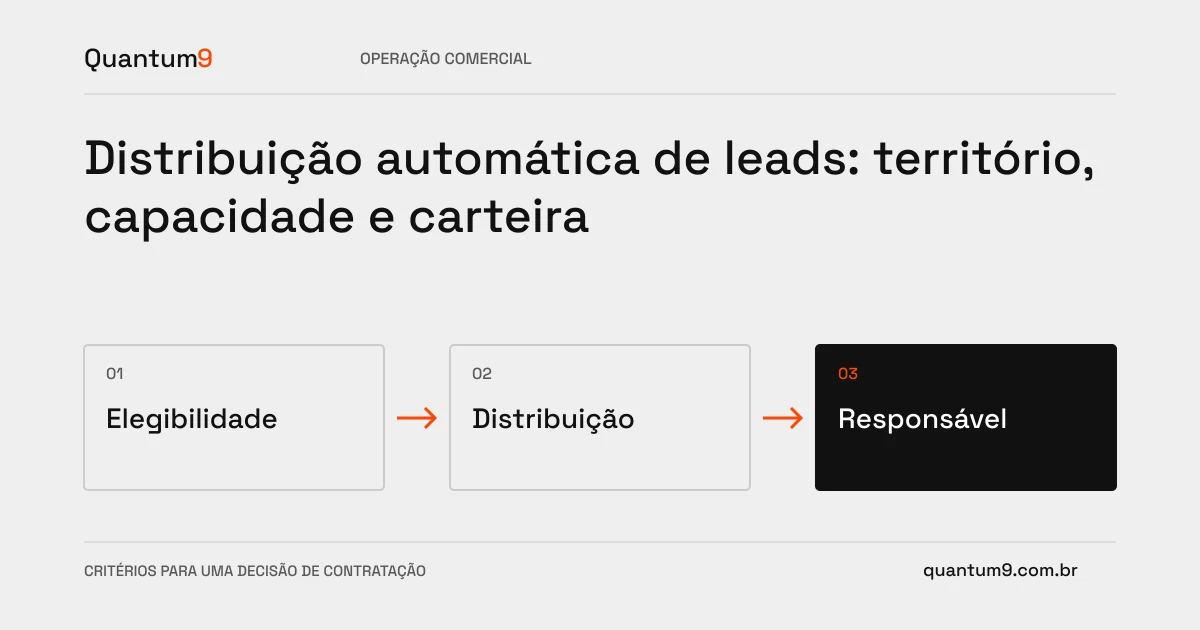
Sort decision criteria: existing customer, service, region, capacity or rotation. Resolve conflicts before implementing. Define what happens when no sellers are eligible and how absences change the queue. A rule change must affect new referrals in a controlled manner, without automatically moving opportunities into negotiation.
Criteria for comparing proposals
- Eligibility: keep teams, territories and availability updated by defined responsible parties.
- Exceptions: forward ambiguous cases for review and preserve the reason for the decision.
- Reassignment: record transfer, notice and treatment of activities already scheduled.
A scenario to discuss with the supplier
Hypothetical example: An existing customer contact requests another service. The rule can retain the account owner and involve an expert, rather than creating dispute between wallets.
What to validate upon delivery
Test rotation, absence, existing portfolio and absence of candidate. Check the distribution in a sequence of entries and check that resubmissions of the same form do not generate competing forwards.
Prepare the conversation about the project
Quantum9 can implement routing in CRM or through integration. Bring current rules, recurring conflicts and availability criteria; The project must include a manageable exception queue.
CRM and retention · Map the company's priority