
Index
A CRM begins to generate value when the team can identify the person responsible and the next step for each opportunity. Importing contacts and creating steps with known names is not enough to organize the commercial operation.
How to evaluate this decision
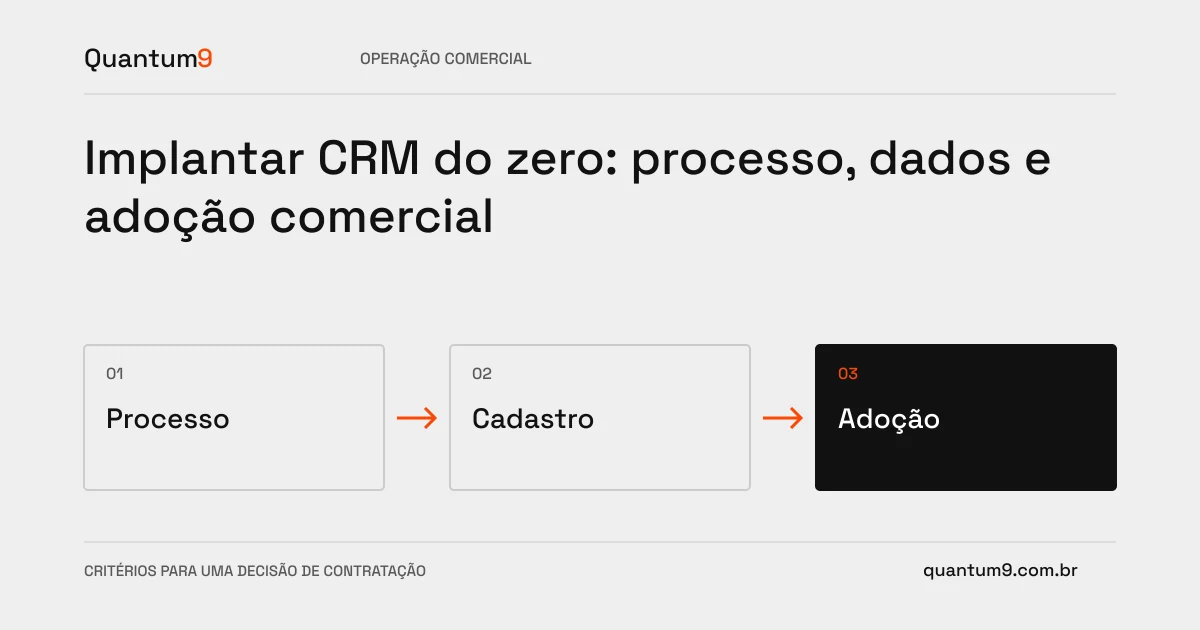
Define what characterizes entry, qualification, advancement and loss. Limit required fields to what actually supports an action or analysis. Old records must be reviewed before importing to avoid turning the CRM into a copy of inconsistent spreadsheets. Choose a pilot team and take time to adjust rules based on actual usage.
Criteria for comparing proposals
- Funnel: use observable criteria for each passage, avoiding steps based solely on the seller's perception.
- Data: separate person, company and opportunity, with those responsible for updating.
- Routine: combining monitoring, training and handling opportunities without next action.
A scenario to discuss with the supplier
Hypothetical example: a company uses a submitted proposal as the final step, but does not record a decision or reason for loss. Deployment needs to complete the cycle so that the funnel represents results, not just activity.
What to validate upon delivery
Track real opportunities from receipt to completion. Check deduplication, permissions and reports. An imported base without technical errors may still be unsuitable for commercial routine.
Prepare the conversation about the project
Quantum9 can connect process, configuration and integrations. Bring input channels, roles, current tools and examples of opportunities to define a deployment that the team can maintain.
CRM and retention · Map the company's priority