
Index
Tracking loaned equipment requires knowing which physical unit was delivered, to whom and in what condition. An aggregate balance does not explain disappearances, delays or discrepancies in returns.
How to evaluate this decision
Identify assets individually when needed and model delivery, transfer, maintenance and retirement as separate events. Define how the person confirms receipt and who can record faults. The change of person responsible must preserve the chain of custody. Avoid deleting a loan to correct an error: prefer a traceable adjustment in accordance with internal rules.
Criteria for comparing proposals
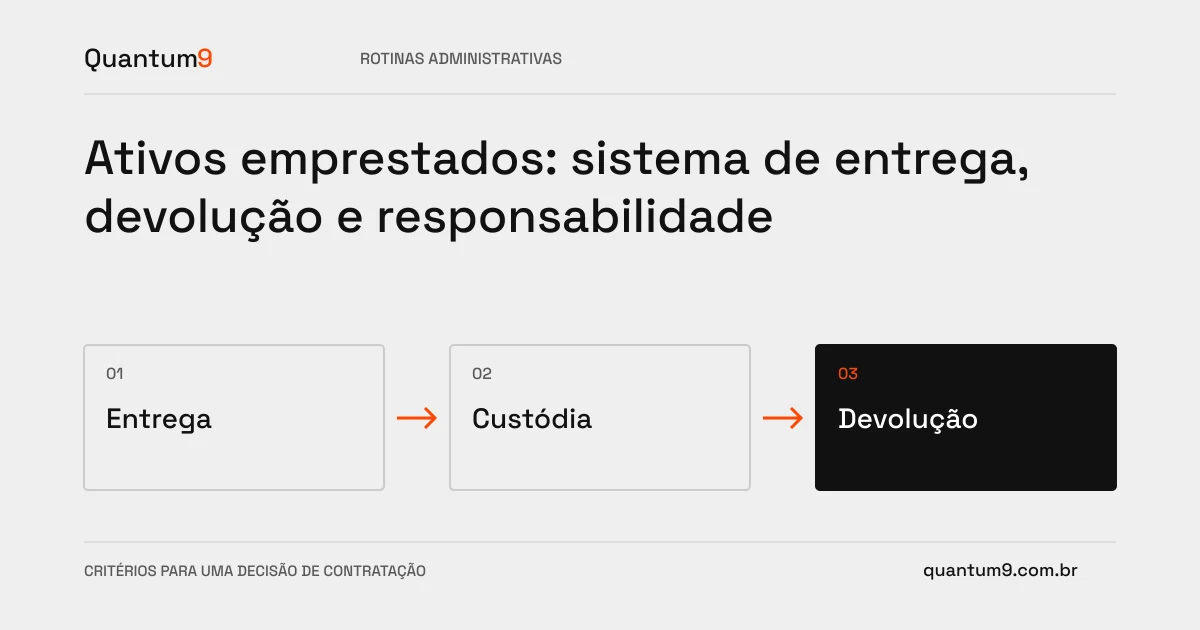
- Delivery: register assets, accessories, condition, person responsible and expected return period.
- Movement: allow authorized transfer and identify assets that are unavailable or undergoing maintenance.
- Return: check items, discrepancies and subsequent destination before releasing a new delivery.
A scenario to discuss with the supplier
Hypothetical example: one notebook returns without an accessory, while another is transferred to a new team. The two events require different records; marking both only as returned eliminates operational information.
What to validate upon delivery
Go through loan, extension, transfer and return with divergence. Please note that the same asset cannot be in two confirmed deliveries simultaneously.
Prepare the conversation about the project
To evaluate the system with Quantum9, enter asset types, available identification, units and responsibility rules. The first implementation can cover a category and integrate the existing asset register.
Process automation · Map the company's priority