
Index
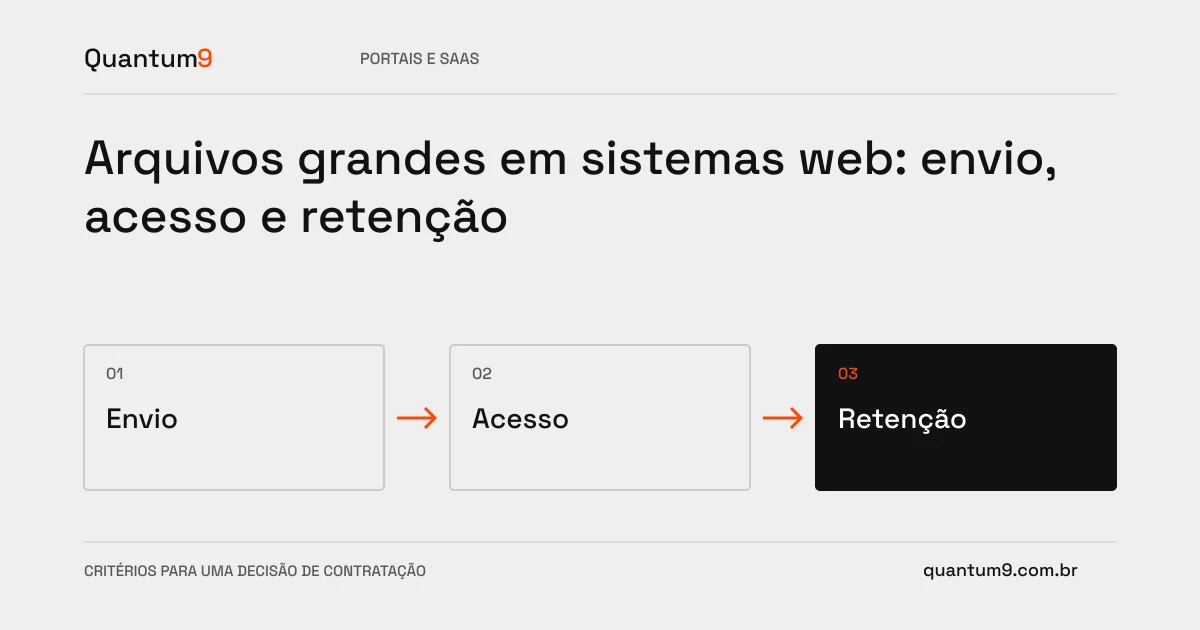
Sending large files involves unstable network, processing time and storage cost. The design must consider the complete journey, from selection to authorized access and planned removal.
How to evaluate this decision
Define file types, limits and purpose. Evaluate returnable shipping according to need and infrastructure. Separate the received file from the ready-to-use file when validation or processing takes place. Avoid public URLs for convenience if the content is restricted. The retention policy needs to include versions, abandoned files, and linking to deleted records.
Criteria for comparing proposals
- Experience: show progress and guide resumption without losing context.
- Access: check authorization for sending, reading and deleting.
- Operation: monitor failures, capacity and items without a valid link.
A scenario to discuss with the supplier
Hypothetical example: a user uploads a video and closes the tab before completing registration. The system needs to identify the unassociated file and apply the defined policy, rather than accumulating objects indefinitely.
What to validate upon delivery
Test outage, size exceeded, access from another account and removal. Check whether messages reflect the actual state and whether the file becomes unavailable when access is revoked.
Prepare the conversation about the project
Take formats, volumes and usage rules to Quantum9. Implementation must balance experience, authorization and storage maintenance, with technical limits presented before shipping.
Development of portals · Map the company's priority