
Index
A recurring contract requires more than repeating work orders. The system needs to relate expected obligations, visits carried out and pending issues that remain open between cycles.
How to evaluate this decision
Separate contracted frequency, scheduling and actual execution. One visit may not complete all the work, while a reschedule should not erase the original occurrence. Define how holidays, absences, and access restrictions affect the schedule. Integrate commercial information without allowing a contract change to rewrite the history of services already provided.
Criteria for comparing proposals
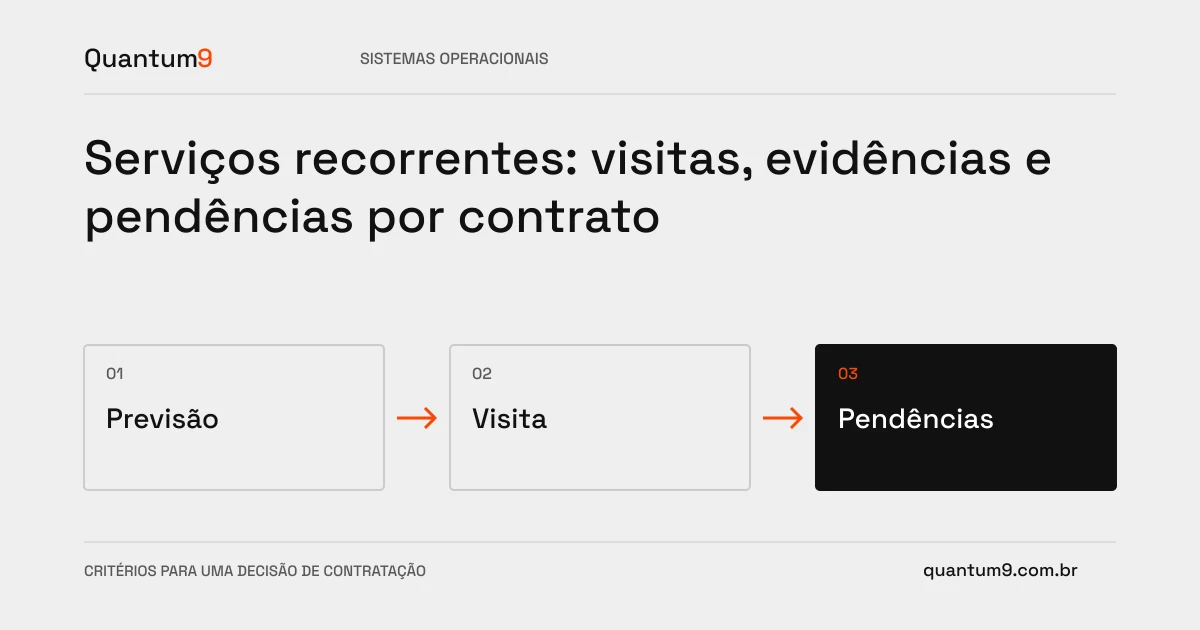
- Planning: generate occurrences based on the current version of the contract and avoid duplication.
- Execution: record evidence, items not carried out and reason for pending.
- Follow-up: maintain pending issues between visits and forward them to the appropriate person in charge.
A scenario to discuss with the supplier
Hypothetical example: the team visits the customer, but is unable to access an area. The record must prove the visit and keep the incomplete service visible, without declaring full execution.
What to validate upon delivery
Test frequency change, partial visit and contract termination. Check which occurrences remain valid and how the operation refers to the obligation for the period.
Prepare the conversation about the project
Take contract templates, calendar, required evidence and reasons for rescheduling to Quantum9. The first cycle can organize a recurring modality and integrate billing only to the necessary limit.
Tailor-made systems · Map the company's priority