
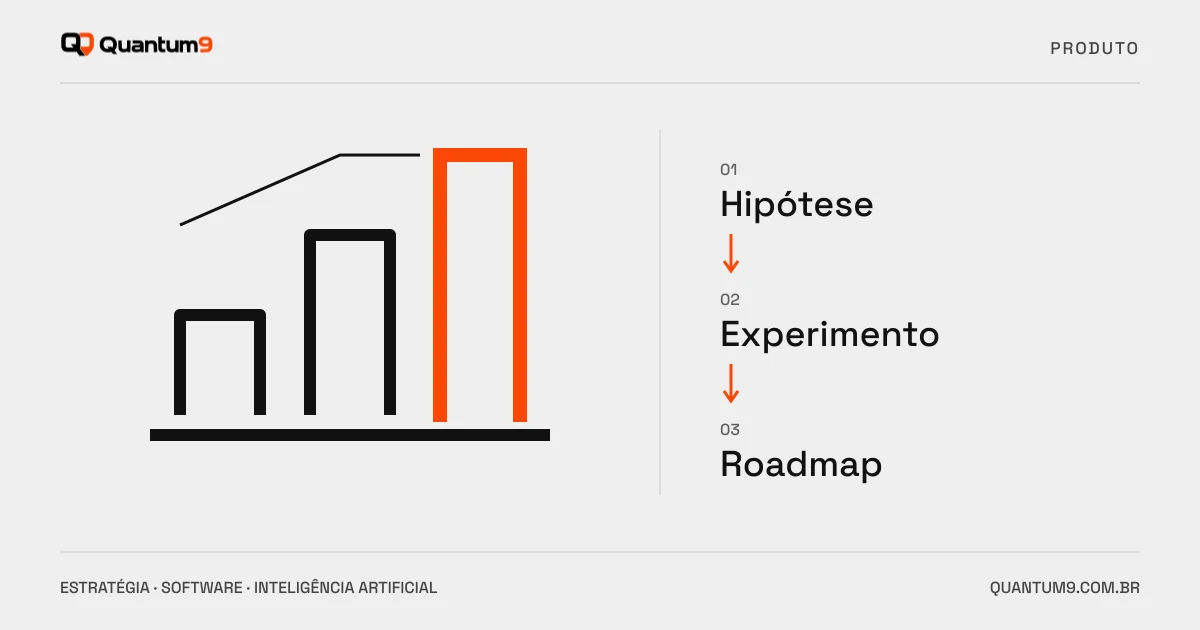
Lean process to transform hypotheses into decisions and prioritized backlog.
Index
Discovery that generates decisions, not documentation
The objective is to reduce uncertainty. Structure short discovery cycles with objective exit criteria.
1. Hypotheses and risks
Map out what could invalidate the idea (technical, value, usability).
2. Experiments
Quick tests: prototypes, concierge, fake feature. Measure signals, not opinions.
3. Decision
Promote, pause or discard. No attachment. The backlog must reflect learning.
Do you want to drive a discovery? We lead the process and deliver a prioritized roadmap.
How to turn the topic into a hiring decision
Discovery makes sense when a major uncertainty prevents deciding what to build. Define the question and expected decision before hiring workshops. Producing many paintings does not prove learning.
What to include in the scope
Combine interviews, observation, prototypes or technical tests depending on the risk. Differentiate observed need from stated preference. A buyer saying they like the idea does not prove willingness to pay or repeat adoption.
How to check delivery
The closure must show evidence, decisions and hypotheses that are still open. The roadmap needs to relate deliverables to problems, with dependencies and review criteria. Dropping a feature can be a useful result.