
Index
A loading schedule does not represent what actually happens at the entrance. The solution needs to track arrival, checking, waiting and release, making deviations visible to those who coordinate the operation.
How to evaluate this decision
Differentiate between scheduled time, actual arrival and start of service. Set priority and exceptions for delays, pending documentation, or unavailable resources. The queue must reflect approved operational rules, not just the order in which a record was created. Changes need to have responsible and reason to avoid disputes without evidence.
Criteria for comparing proposals
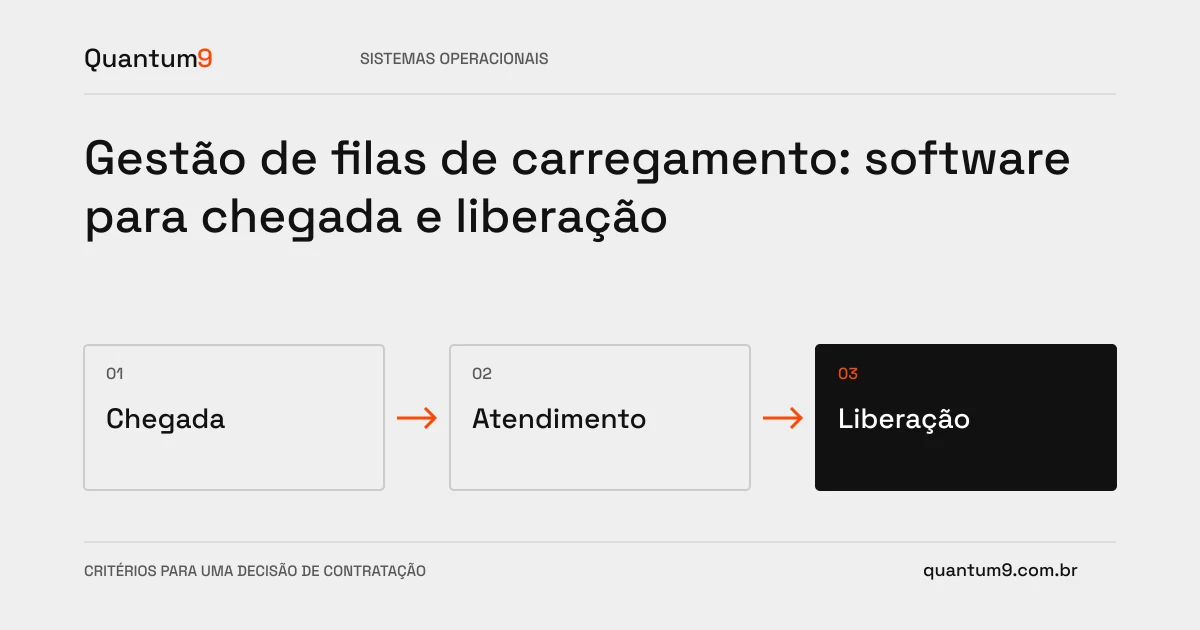
- Arrival: list scheduling, vehicle, documentation and conference status.
- Service: record call, resource used, start and impediments.
- Release: confirm completion and pending issues without confusing physical exit with administrative closure.
A scenario to discuss with the supplier
Hypothetical example: a vehicle arrives on time, but cannot enter due to lack of documents. The panel must distinguish this wait from the delay caused by dock unavailability.
What to validate upon delivery
Test delay, absence, change of priority and unavailability during service. Check if the times are calculated from the correct events and if adjustments leave a history.
Prepare the conversation about the project
Quantum9 can develop monitoring and integrate agenda, concierge and operational systems. Bring available steps, priorities and events to choose a framework that reduces uncertainty in coordination.
Tailor-made systems · Map the company's priority