
Index
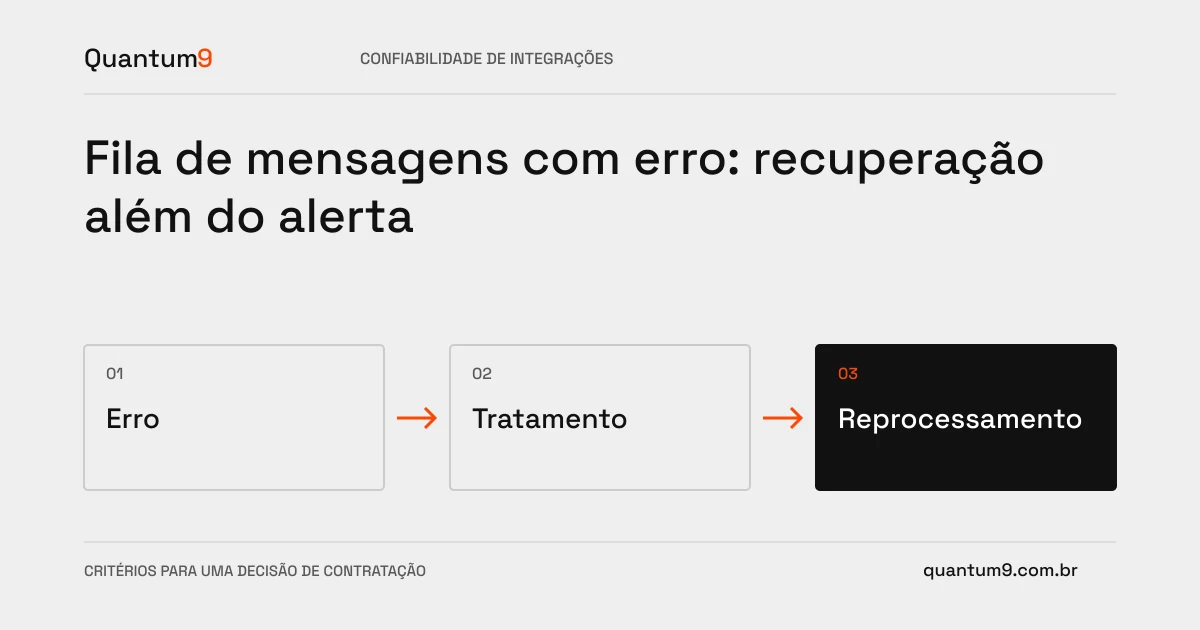
An alert informs you that something has failed, but does not resolve the pending event. The integration needs to provide a controlled path to investigate, correct, and reprocess error messages.
How to evaluate this decision
Separate temporary failure from error that requires data change or intervention. Set attempt limits and what happens when they are reached. The exception queue must preserve enough context without exposing unnecessary secrets or data. Reprocessing requires authorization and must respect duplication protection.
Criteria for comparing proposals
- Diagnosis: present stage, known cause and link to the original operation.
- Treatment: record correction and responsible before releasing new attempt when necessary.
- Conference: confirm the result at the destination and close the pending issue with evidence.
A scenario to discuss with the supplier
Hypothetical example: an order fails because the product does not exist at the destination. Repeating every minute doesn't solve it. After correcting the registration, the team needs to resume the same order without creating another independent operation.
What to validate upon delivery
Permanent failure testing, correction and authorized reprocessing. Check that old messages are not forgotten and that the panel shows age, impact and person responsible.
Prepare the conversation about the project
Take Quantum9 to examples of failures, volumes and who operates the integration. The scope must include team-usable recovery, not just technical logs that depend on a developer for each case.
Integrations and APIs · Map the company's priority