
How to integrate ERPs, CRMs and sales platforms with APIs and event-driven without a headache.
Index
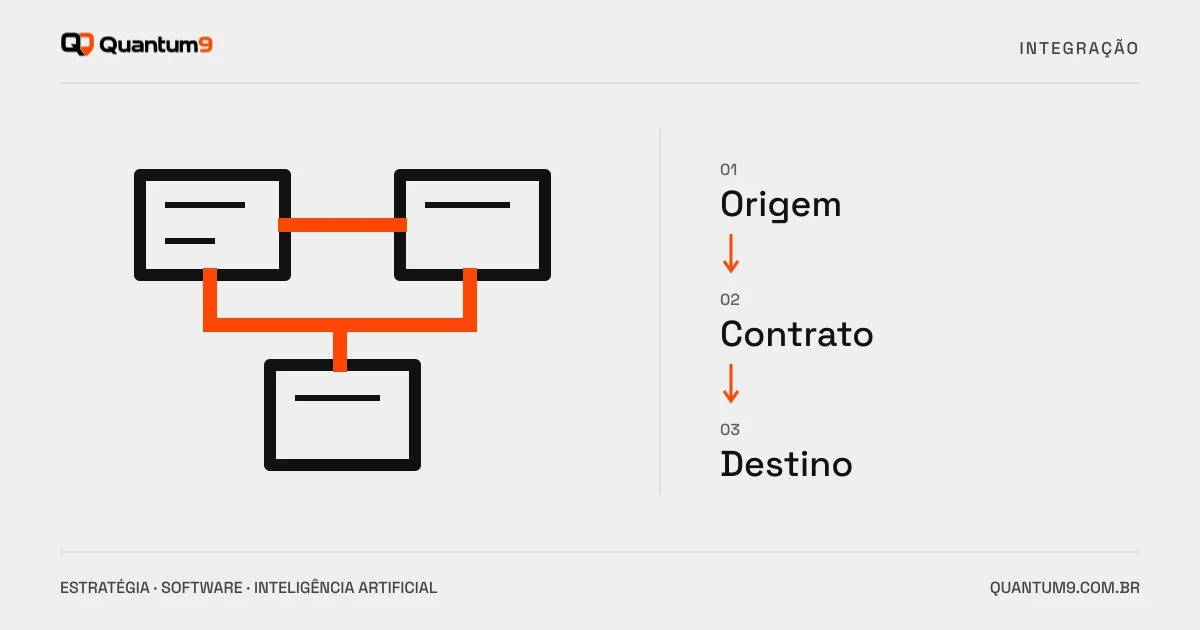
Integrations that scale without becoming “pulls”
Integration is not just “connecting A to B”. It is data governance, resilience and observability. Event-driven architectures reduce coupling and avoid dependencies between processing windows.
1. Integration Patterns
- Well-defined webhooks: asynchronous, idempotent, with retry backoff.
- Queues/event bus: they decouple services and allow reprocessing.
- CDC: change capture for secure replication between banks.
2. Contracts and versioning
OpenAPI/JSON Schema with clear versioning avoids “invisible breaks”. Contract testing helps detect incompatibilities before publishing.
3. Predictable errors
Failures happen. Strategy: DLQ (dead-letter queue), replays with audit and alerts by type of error (business vs. platform) for quick response.
4. Observability
Distributed trace connects requests between services. Correlation-structured logs (traceId) simplify support and reduce MTTR.
Want an integration map? We deliver blueprints with APIs, events and SLAs per domain.
How to turn the topic into a hiring decision
APIs serve direct queries and commands; events communicate events. The choice depends on the need for response, consistency and recovery. A bus does not eliminate the need to define who owns each piece of information.
What to include in the scope
Document contracts, authentication, limits, repetition, and message order. Agree how a consumer recovers lost events and how version changes will be published. Faults need to be visible to operation.
How to check delivery
Test repeated message, delay and target system unavailable. Confirm that there is no duplication of effects and that reprocessing maintains history. Delivery must include an operational procedure, not just endpoints.