
Index
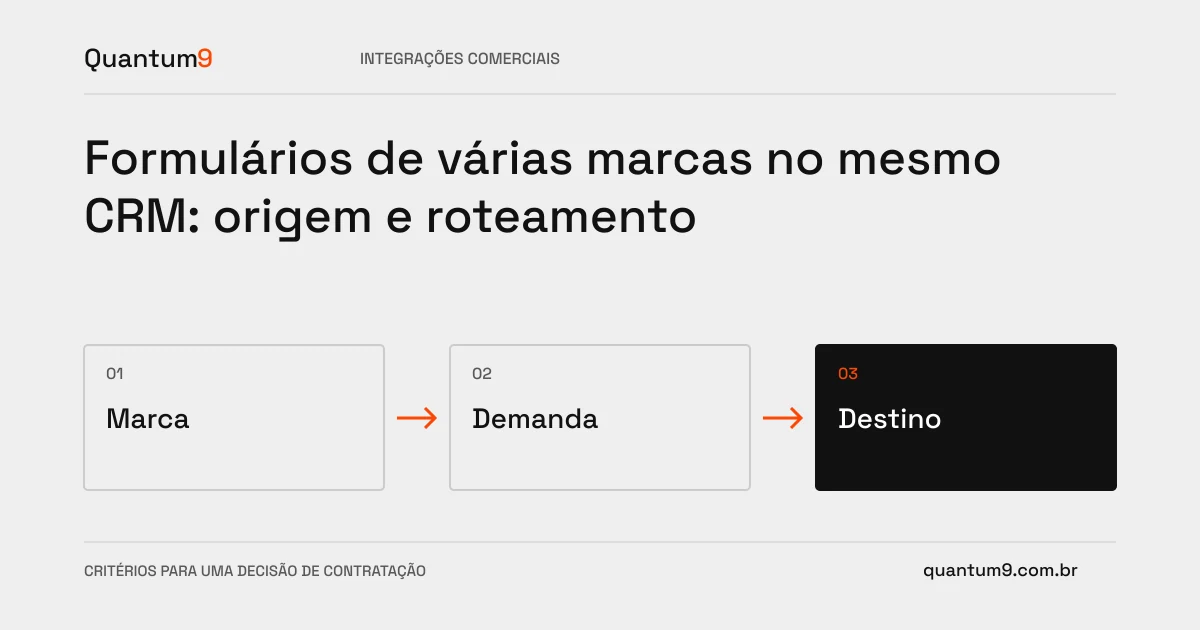
Centralizing forms from multiple brands helps organize service, but it can mix up offers and managers. Integration must preserve origin and context without creating unnecessary duplicate bases.
How to evaluate this decision
Define what identifies brand, page, service and campaign. Don't rely exclusively on fields that the browser can change to authorize sensitive actions. Separate contact deduplication from creating a new demand: the same person can search for two legitimate offers. Routing must use verifiable rules and have a queue for incomplete entries.
Criteria for comparing proposals
- Capture: transport form context and validate data on the server.
- Relationship: maintain single contact when appropriate, with different opportunities for different demands.
- Destination: apply responsible for brand or offer and register reason for forwarding.
A scenario to discuss with the supplier
Hypothetical example: A customer fills out two-unit forms. Merging contacts may be correct, but dismissing the second request as a duplicate eliminates a valid demand.
What to validate upon delivery
Submit tests for each brand, including repeat contact and temporary CRM failure. Check origin, responsible and resumption without duplicating opportunities.
Prepare the conversation about the project
Quantum9 can implement capture and routing. Bring in CRM tags, forms, business rules, and fields to define which data will be shared and which requires separation.
Systems integration · Map the company's priority