
Index
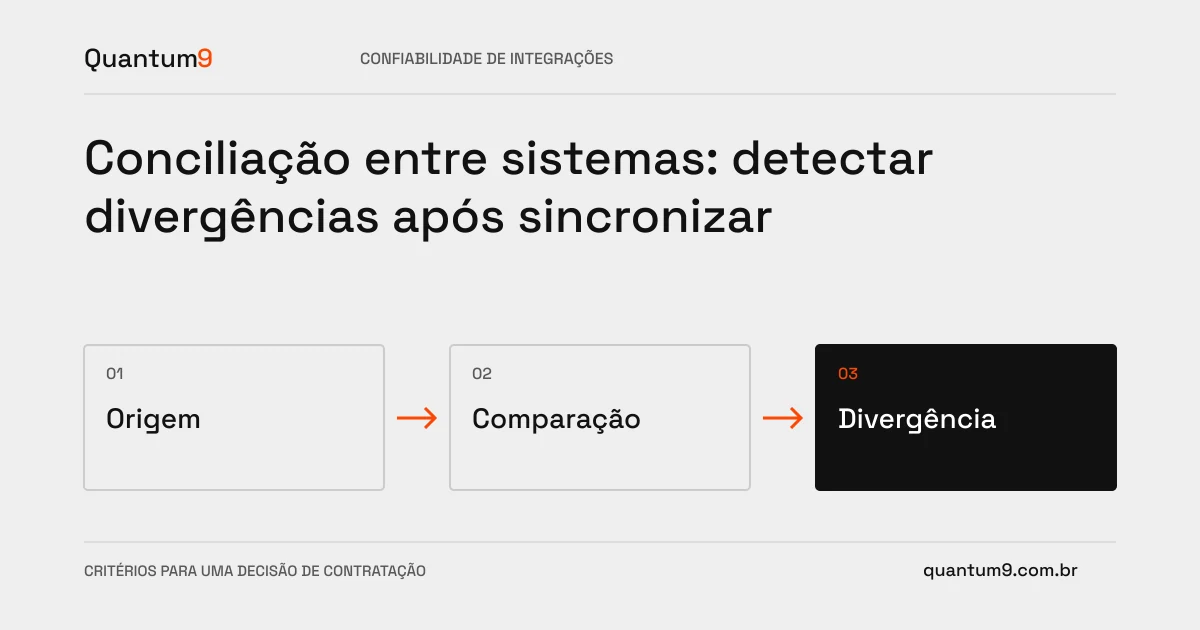
An integration can record successful submissions and still maintain conflicting data. Reconciliation compares the business result at both ends to identify what did not arrive, arrived differently or was changed later.
How to evaluate this decision
Choose identifiers, fields and comparison period. Not every difference represents an error: systems can have different states and update times. Define justified tolerances and deviation categories. Reconciliation must generate traceable actions, avoiding automatically correcting data without knowing the authorized source.
Criteria for comparing proposals
- Matching: relating operations by the correct identifiers, without relying solely on name or value.
- Comparison: check quantity, status and critical fields with documented rules.
- Correction: forward disagreements to the person responsible and record the result of the treatment.
A scenario to discuss with the supplier
Hypothetical example: the portal marks an order as shipped, but the ERP rejected an item. Comparing just the existence of the number does not detect the difference; the conference needs to reach the level necessary for operation.
What to validate upon delivery
Introduce known divergences into a test environment and confirm their detection. Check that resolved cases do not reappear unduly and that corrections leave a history.
Prepare the conversation about the project
Quantum9 can develop reconciliation and the treatment queue. Inform critical operations, reference fields and frequency necessary for the comparison to result in practical action.
Integrations and APIs · Map the company's priority