
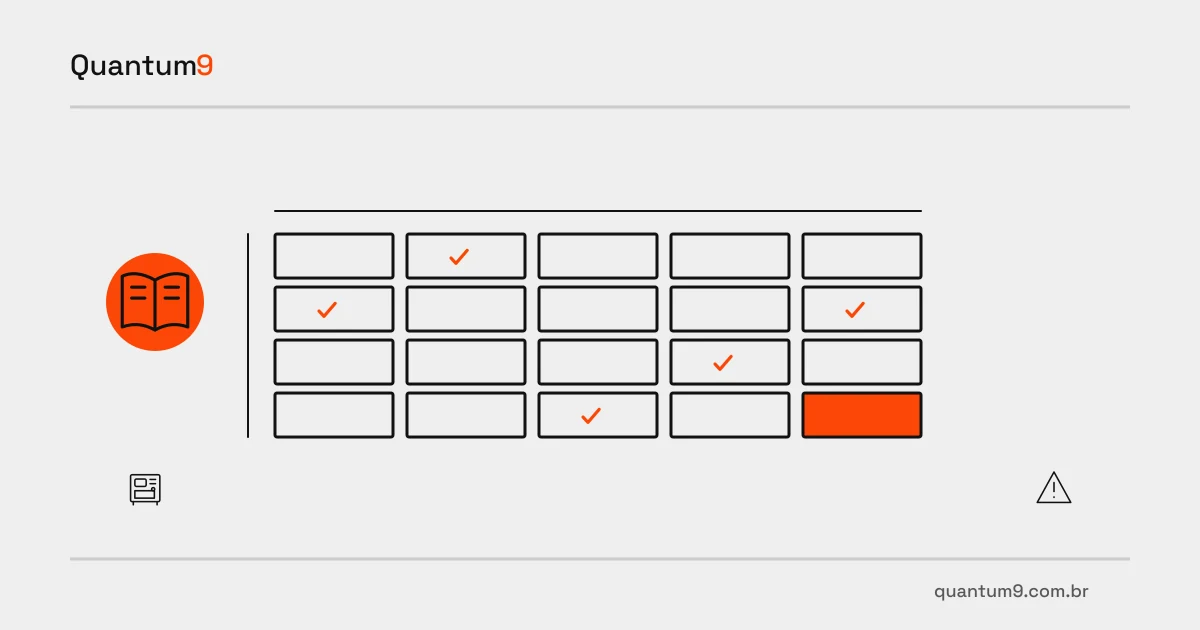
Measure fulfilled requirements and received files separately when one document covers several assets in a package.
Index
A manual can serve several assets, and each asset can require several documents. Received-file counts do not represent dossier coverage without an explicit relationship to requirements.
The unit of analysis determines the result
The model must distinguish document, version and asset-specific requirement. Coverage relationships may be many-to-many, but the result must count unique requirements. A replaced file retains history; its current version covers only points for which it was checked.
A native matrix can support small packages. An analytical layer helps consolidate multiple projects and inspect coverage at different dates. Rules must not infer fulfillment from filenames or automatically apply one asset's acceptance to another with a different requirement.
Requirements for comparing BI proposals
- Keep the requirement matrix valid for each package and the version used during review.
- Separate present files, accepted versions and fulfilled requirements into measures with their own denominators.
- Show unchecked associations and authorized exceptions without mistakenly classifying them as missing documents.
A check before using the measure
In a hypothetical scenario, one manual serves two assets but is accepted for only one. Check that reporting counts one file and only the reviewed requirement as fulfilled. Add a manual revision: earlier coverage must remain available without doubling document counts or automatically closing the second asset's outstanding requirement.
Reference for assessing scope
Microsoft Learn: facts, dimensions and analytical model grain
Prepare your project with Quantum9
Bring a document matrix and acceptance relationships to Quantum9 to model package coverage.