
Index
Contracted, invoiced and received revenue represent different moments. A recurring contracts dashboard needs to maintain this distinction to support baseline forecasting and tracking.
How to evaluate this decision
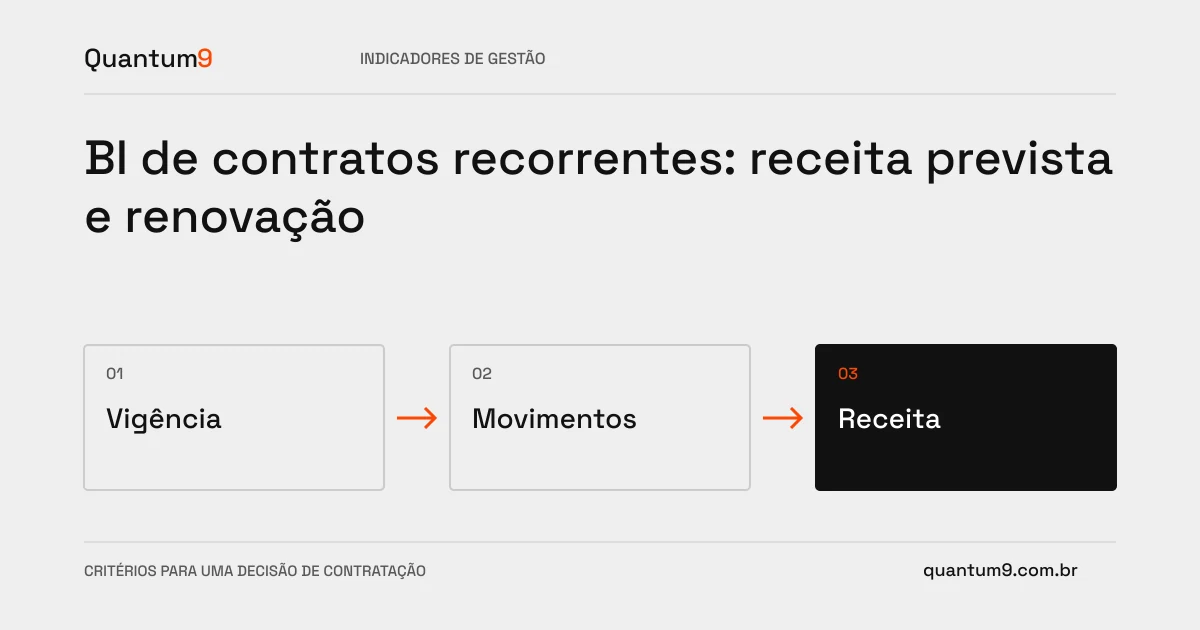
Model validity, changes and accrual periods according to business definitions. Separate expansion, reduction, suspension and closure. A future condition should not rewrite the historical revenue. When there is financial data, relate it to the contract to check differences without assuming equivalence between contracted value and cash.
Criteria for comparing proposals
- Base: identify contract, customer, version and validity period of the conditions.
- Movement: explain entries, expansions, reductions and exits in the period.
- Reconciliation: distinguish planned, invoiced and received with explicit sources and dates.
A scenario to discuss with the supplier
Hypothetical example: a customer extends the contract in the middle of the period. The panel must apply the agreed rule and preserve the previous condition, without projecting the new value retroactively for all months.
What to validate upon delivery
Recalculate contracts with changes and compare with the operational source. Check that cancellations and suspensions affect the correct periods.
Prepare the conversation about the project
Bring Quantum9 business rules, version history and financial sources. The model must reflect the definitions approved by the company and allow the investigation of divergences between forecast and realization.
Data and BI · Map the company's priority