
Index
Slowness under load can be caused by queries, concurrency, external services, or the interface. Rewriting before finding the bottleneck may repeat the problem in another technology.
How to evaluate this decision
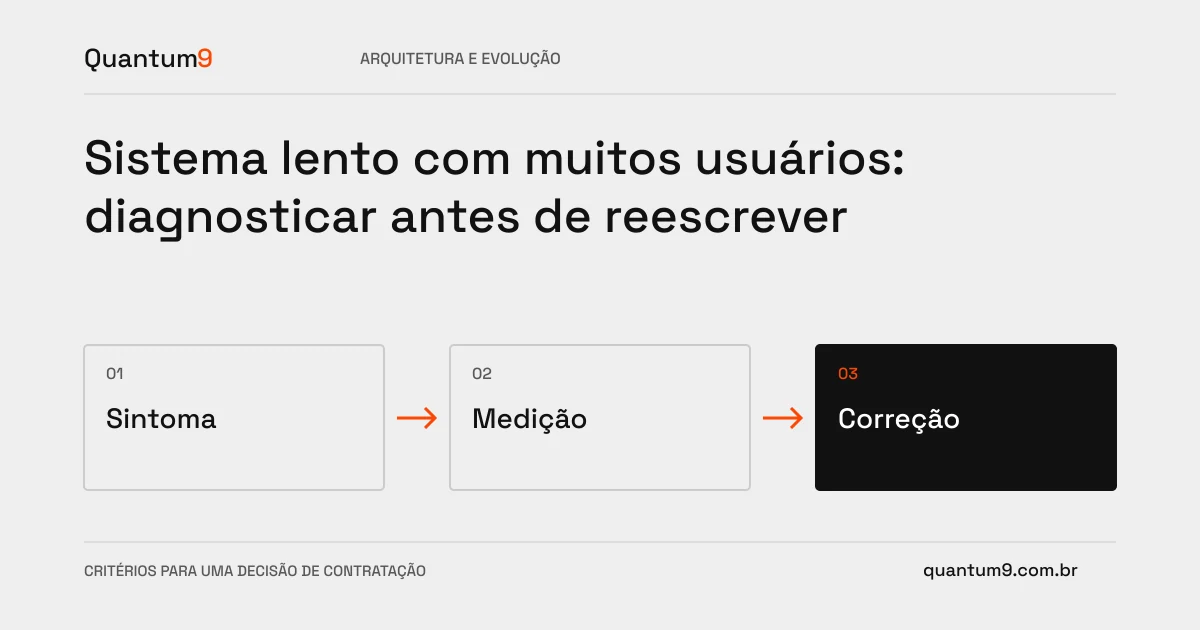
Define which journeys are slow, at what time and with what volume. Measure times per step and relate them to actual usage. Differentiate a slow operation for everyone from a queue caused by concurrency. The diagnosis must produce testable hypotheses and prioritization, avoiding concluding that there is a lack of infrastructure just because the problem appears at its peak.
Criteria for comparing proposals
- Reproduction: record load, data and sequence that cause slowness.
- Measurement: separate application time, bank, network and dependencies when possible.
- Intervention: compare alternatives with cost, risk and expected effect.
A scenario to discuss with the supplier
Hypothetical example: an unfiltered query grows with the base and blocks a screen used by the entire team. Correcting data access can resolve the journey without changing the framework.
What to validate upon delivery
Repeat the scenario before and after the correction with comparable conditions. Also check errors and consumption, so as not to exchange slowness for failures or disproportionate cost.
Prepare the conversation about the project
Quantum9 can investigate journeys and implement prioritized fixes. Bring times, users, symptoms and authorized access to metrics; the proposal must separate diagnosis from changes not yet justified.
Software architecture · Map the company's priority