
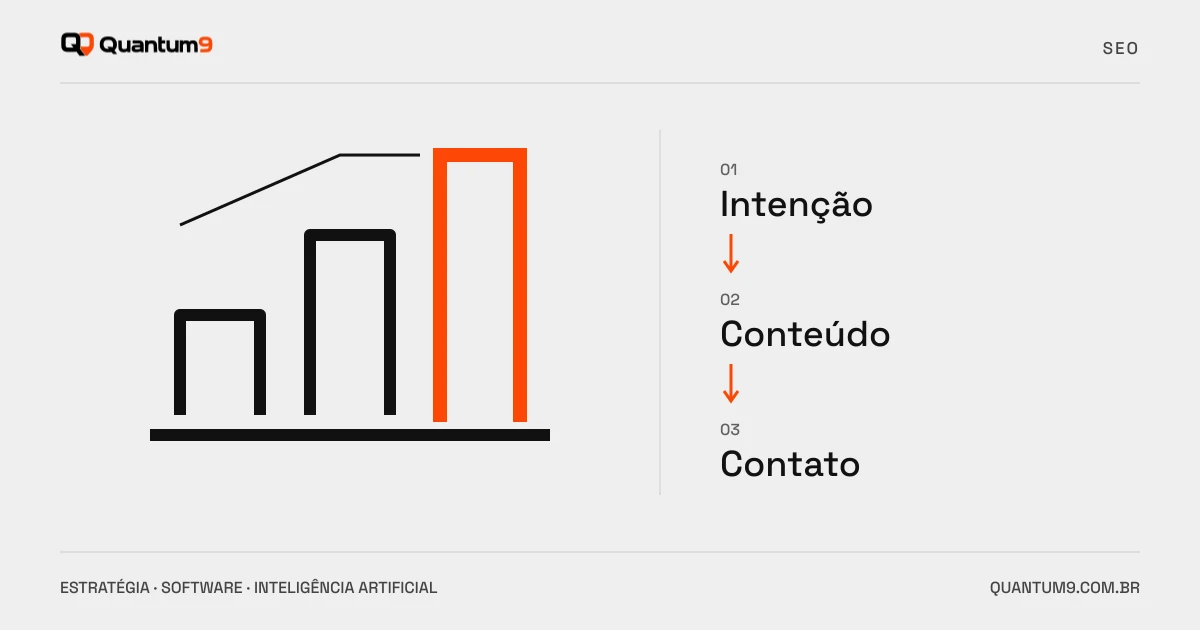
Practical SEO strategy for SMEs focused on conversion and qualified traffic.
Index
Why strategic SEO is a priority for SMEs looking to scale
SEO is not just about generating visits; is to build a predictable funnel of qualified demand that reduces dependence on paid media. SMEs that structure SEO well can reduce CAC and shorten the sales cycle because the lead arrives better informed. With method and consistency, it is possible to transform a timid presence into a solid foundation.
1. Impact-focused technical audit
Start by clearing obstacles: check Core Web Vitals, slow pages, keyword cannibalization, excessive redirects and sitemap/robots. Simple tweaks to image compression, caching, and eliminating useless JS often unlock forgotten performance. Also fix duplicate meta titles and inconsistent heading hierarchy.
2. Clustered content architecture
Structure central themes (e.g. digital transformation, on-demand development, systems integration) — each cluster has a pillar page + satellite articles that delve into sub-problems. This helps Google understand thematic relevance and increases the chance of multiple rankings for long-tail terms.
3. Pages that convert, not just inform
Integrate social proof (summary cases), micro-CTAs ("Request diagnosis", "Compare approach"), short forms and FAQs directly into the content flow. Use scroll heatmaps and engagement events to figure out where to insert value boosters without feeling intrusive.
4. Search intent & journey mapping
- Top of the funnel: educate about pain (e.g. "when to migrate spreadsheets").
- Medium: compare approaches (in-house vs. software factory).
- Background: service pages + proof of execution (KPIs achieved).
5. Data Structure & Trust
Implement schema Organization, WebSite and Article. Use markup that supports visible content. Structured data helps describe the page, but does not guarantee rich results, clicks or positions. For service pages, include blocks with actual metrics (average MVP delivery time, rework reduction, support SLA).
6. Content that accelerates sales
Add real scenario comparisons: estimated time vs. internal resources, cost of delay vs. structured outsourcing, risks avoided with scalable architecture. Leads who see clarity of trade-offs move forward faster.
7. Cadence and governance
Set a scored editorial backlog by business potential and difficulty. Reevaluate monthly: consolidate pages that compete with each other, update statistics and promote what already generates traffic with new CTAs. Consistency + incremental improvement beats bursts of effort.
Next step: Do you want to map earning opportunities? Request a diagnosis of the scenario — we analyze technique, content and conversion to put together a streamlined and prioritized plan.
How to turn the topic into a hiring decision
For an SME, the priority should be the search that brings a buyer closer to the offer. A company that sells integration projects needs to explain which systems it connects, how it evaluates the scenario and what will be delivered. Attracting visits to distant subjects can increase traffic report without generating commercial conversations.
What to include in the scope
Separate technical corrections, improvement of service pages and editorial production. Use real Search Console queries when available; without history, treat the guidelines as hypotheses to be validated. Each content must have a central question and a coherent path to the corresponding service.
How to check delivery
Check that the content is crawlable, appears in HTML, has a canonical URL and is found through internal links. Measure qualified contacts along with organic clicks. Structured data does not guarantee prominence and a technical score does not prove positioning.
Reference: Google's guidance on useful content.