
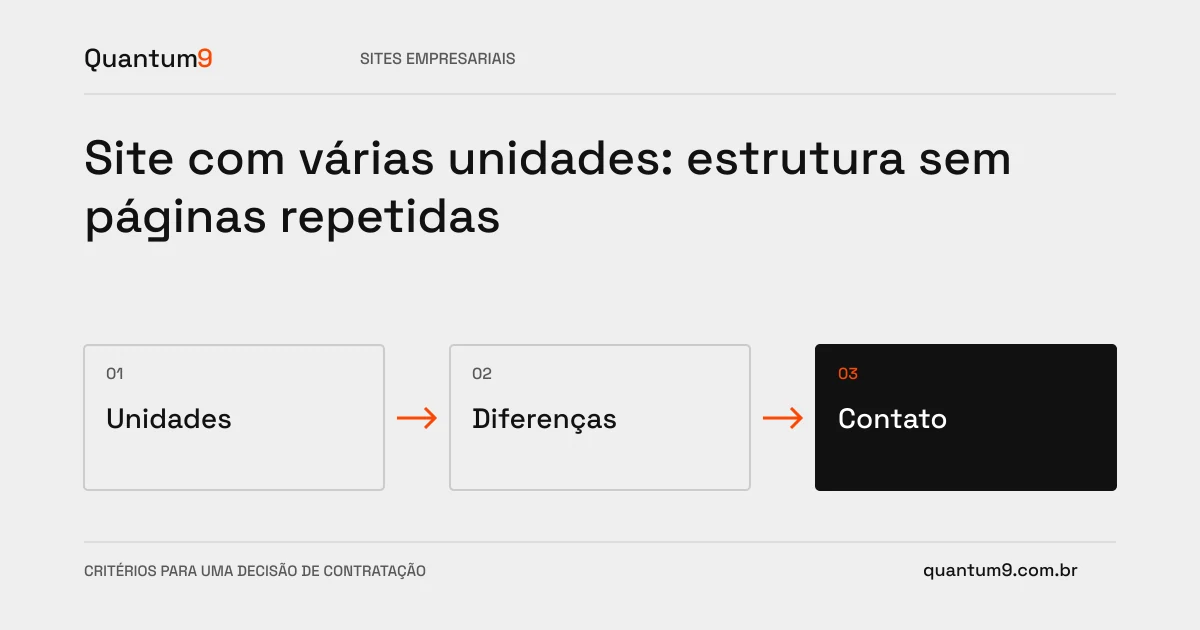
Index
A company with several units needs to explain real differences in service, location and offering. Creating identical pages just changing the name of the city does not help the visitor to choose.
How to evaluate this decision
Map out what each unit effectively offers and what information is shared. Use a common structure, but publish your own details where they exist: team, coverage, access and channels. If there isn't enough content for a useful page, a consolidated section may serve you better. The architecture must guide contact and keep people responsible for updating.
Criteria for comparing proposals
- Content: differentiate institutional information from unit-specific data.
- Navigation: allow you to find care by need and region without multiplying confusing paths.
- Conversion: forward contacts correctly and preserve the unity of interest.
A scenario to discuss with the supplier
Hypothetical example: two units provide different services. The page needs to explain this difference before the form, preventing the visitor from requesting an offer that is unavailable in that location.
What to validate upon delivery
Test location, contact and data updates on each unit. Check links, consistent information and absence of empty pages created just for keywords.
Prepare the conversation about the project
Take local units, offers and managers to Quantum9. The project must organize useful information and track forwarding, without promising positions on Google based on number of pages.
SEO-ready websites · Map the company's priority