
Index
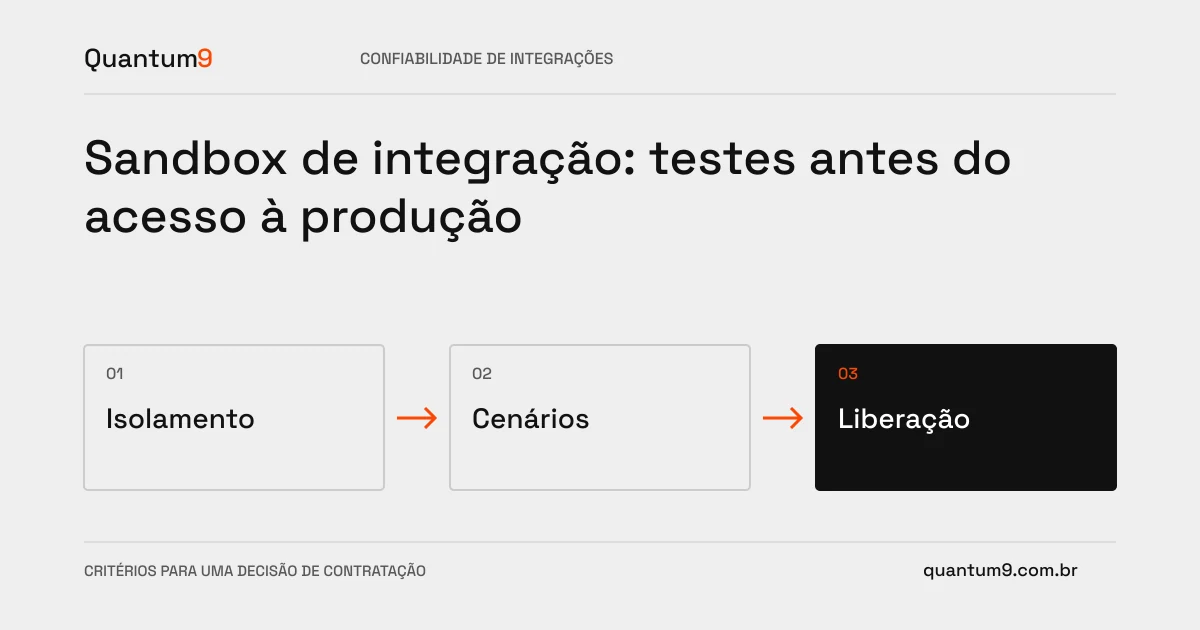
A sandbox only reduces risk when it represents important production behaviors. An environment that always responds success does not allow for validating recovery, limits, or inconsistent data.
How to evaluate this decision
Confirm known differences between test and production: data, permissions, external services, and volume. Use synthetic or properly prepared records. Define which scenarios require further controlled validation because they cannot be reproduced in the sandbox. The existence of testing credentials does not authorize using real data indiscriminately.
Criteria for comparing proposals
- Scenarios: include success, rejection, delay, repetition and unavailability.
- Isolation: Separate credentials, destinations, and notifications to prevent effects on real clients.
- Evidence: record limitations and results that need to be checked upon release.
A scenario to discuss with the supplier
Hypothetical example: the test environment accepts any identifier, but production validates registration. The integration needs to test this rejection in another way so as not to discover the problem only at launch.
What to validate upon delivery
Execute the agreed roadmap and ensure that no test event reaches productive services. Document required configurations and conditions to release the first actual batch.
Prepare the conversation about the project
Provide Quantum9 with APIs, environments, and vendor restrictions. The scope must distinguish available tests, simulations and controlled production checks, with people responsible for each step.
Integrations and APIs · Map the company's priority