
Index
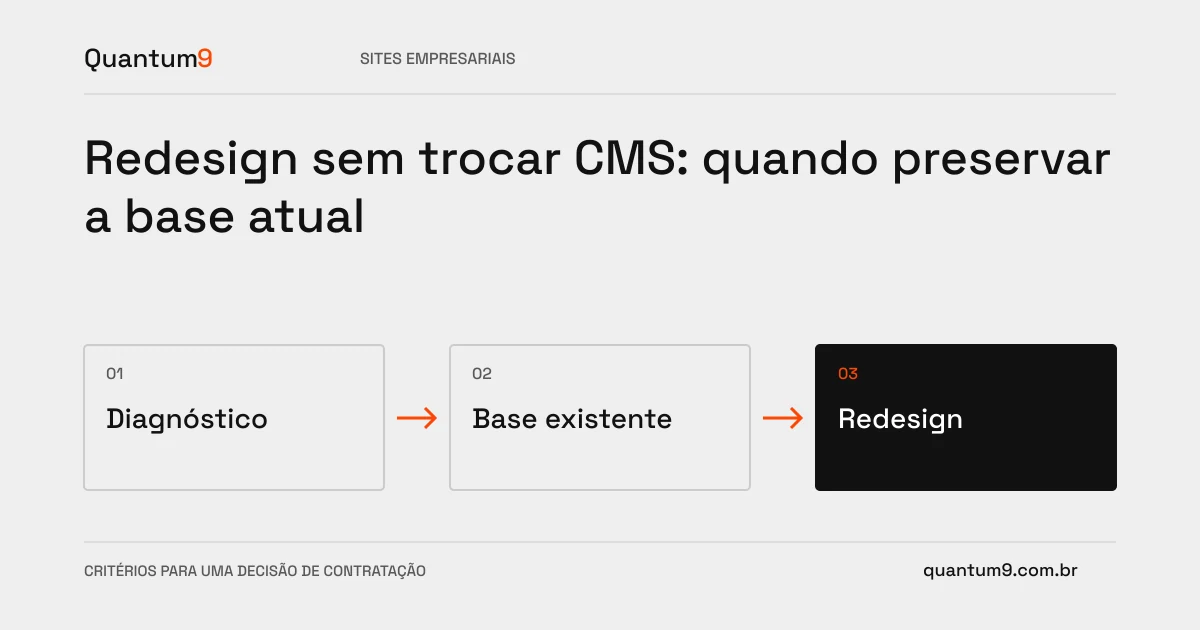
A website with presentation problems does not automatically require changing the CMS. Before migrating, evaluate whether the current base supports the content, performance and autonomy required for the new project.
How to evaluate this decision
Separate theme, content, plugins and architecture limitations. Identify what can be fixed while maintaining URLs and editorial flow. Switching platforms may be appropriate, but it adds migration, training, and risk. The comparison needs to consider the work of maintaining the base and rebuilding, with explicit dependencies and costs.
Criteria for comparing proposals
- Diagnosis: locate real limitations and components that still serve the operation.
- Preservation: Mapping URLs, forms, and integrations that need to continue working.
- Evolution: assess whether the proposed solution will be sustainable for the editorial team.
A scenario to discuss with the supplier
Hypothetical example: the company publishes well on the current CMS, but the theme affects reading and conversion. Redoing the visual layer can resolve the issue with less operational change than a full migration.
What to validate upon delivery
Validate a representative page in the current database and check editing, performance and integrations. Use this evidence to compare alternatives before finalizing the architecture.
Prepare the conversation about the project
Quantum9 can diagnose and redesign your digital presence. Bring limitations, editorial routine, and business objectives to decide what to preserve and what to replace.
SEO-ready websites · Map the company's priority