
Index
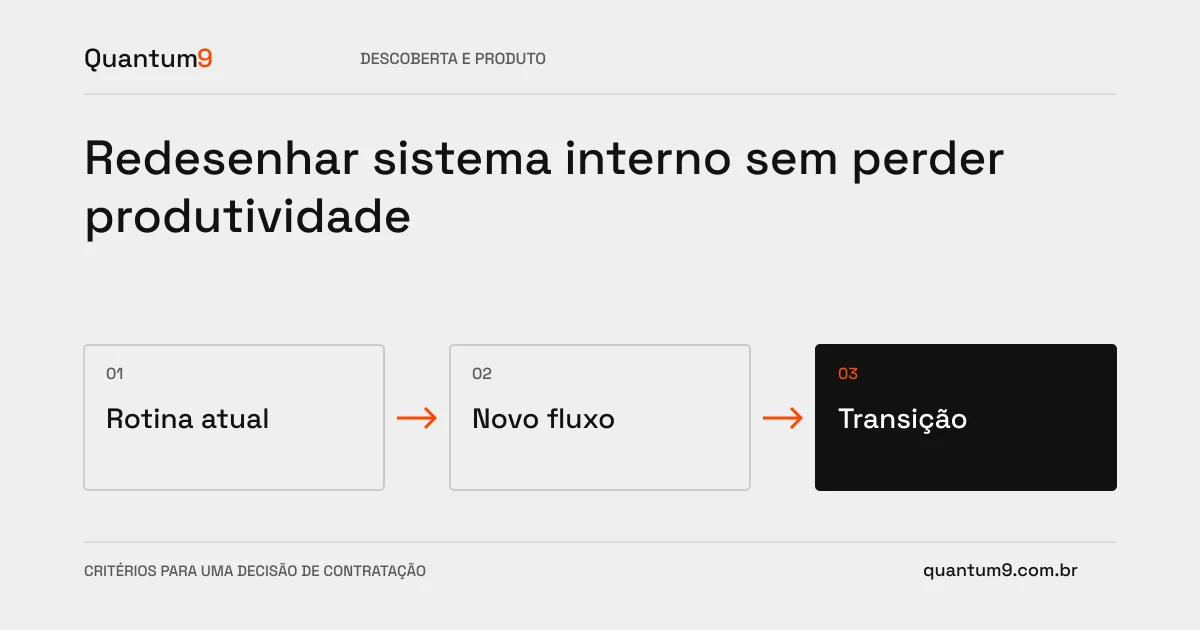
Experienced users may lose speed when a system changes appearance without preserving its working logic. An operational redesign needs to improve the journey and manage the transition of habits.
How to evaluate this decision
Observe frequency, shortcuts, filters and sequences of use before proposing a new navigation. Differentiate a bad convention from learning that is still useful. Broad changes may be necessary, but they need gradual introduction, communication and task comparison. The goal is not to reproduce every old limitation: it is to prevent the new interface from forcing the team to rediscover essential functions during operation.
Criteria for comparing proposals
- Diagnosis: mapping frequent tasks, fields consulted together and steps that currently depend on memory.
- Transition: provide role training, indication of changes and group-controlled release.
- Measurement: track task completion, errors and help requests before and after the change.
A scenario to discuss with the supplier
Hypothetical example: Analysts use a table to compare many orders. Turning it into large cards can improve the presentation and make the comparison worse. Test the proposal with the real task, including keyboard use.
What to validate upon delivery
Collaborate with new and experienced users using the same scenarios. Check preservation of filters, batch actions, and error states. Aesthetic approval from leadership is no substitute for operational validation.
Prepare the conversation about the project
Quantum9 can assess the flow and redesign a priority journey. Bring current screens, user profiles, most frequent tasks and periods in which the operation cannot change.
Prototyping and validation · Map the company's priority