
Index
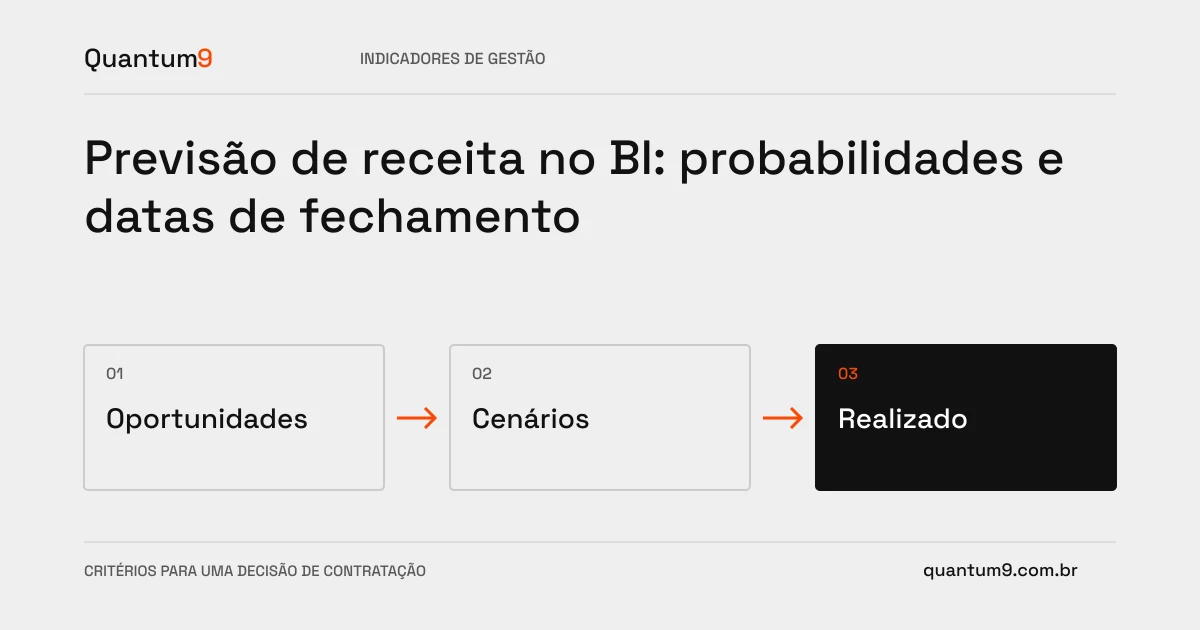
A business forecast needs to show uncertainty. Adding opportunity values with outdated dates produces a seemingly accurate number that is not very useful for planning the operation.
How to evaluate this decision
Define which opportunities come in and how probabilities are assigned. Differentiate the seller's judgment from an estimate based on comparable history. Record date and value revisions to assess forecast quality over time. Don't use the current stage as a guarantee of closure, especially when the funnel has inconsistent criteria.
Criteria for comparing proposals
- Eligibility: remove duplicates and separate new sale, renewal and expansion.
- Time: maintain expected date, last review and reasons for postponement.
- Scenarios: Present ranges and assumptions rather than a revenue promise.
A scenario to discuss with the supplier
Hypothetical example: Several opportunities are automatically postponed to the next month. The forecast appears stable, but history shows that the closure is not progressing. The panel must show this displacement.
What to validate upon delivery
Compare forecasts recorded in previous periods with actual results. Analyze errors by supply and origin, preserving the photography that existed at the time.
Prepare the conversation about the project
Bring Quantum9 forecast history, funnel rules, and expected usage. The delivery must make assumptions and revisions visible, without presenting an estimate as a guaranteed result.
Data and BI · Map the company's priority