
Index
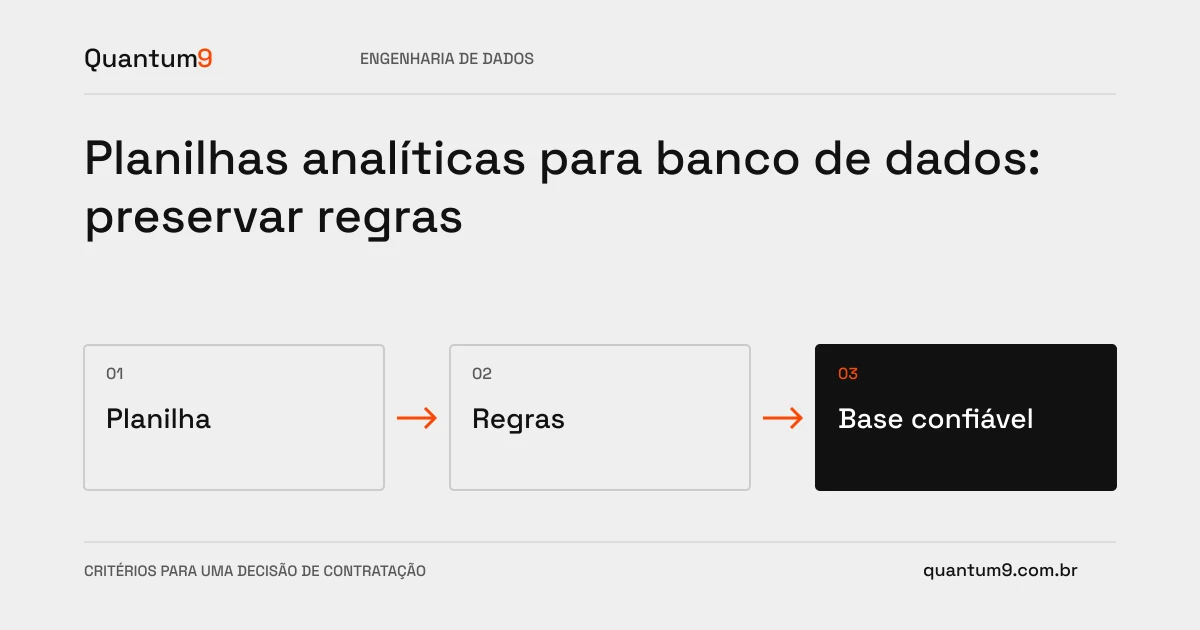
An analytical spreadsheet can contain business rules hidden in formulas and manual adjustments. Migrating just your lines to a bank does not necessarily preserve the result used by management.
How to evaluate this decision
Inventory tabs, formulas, fonts and recurring corrections. Differentiate between original data, calculation and presentation. Contradictory rules need to be resolved with the person responsible before becoming automated transformation. Preserve a sample of known results to compare new processing and document intentional differences rather than trying to reproduce unexplained errors.
Criteria for comparing proposals
- Mapping: identify origin, periodicity and person responsible for each set of data.
- Rules: Transform formulas into verifiable definitions, including exceptions and rounding.
- Transition: maintain controlled comparison between the two solutions until the results are validated.
A scenario to discuss with the supplier
Hypothetical example: an analyst manually corrects a category before closing the report. If this rule is not discovered, the new bank will reproduce the raw source and produce a different indicator.
What to validate upon delivery
Reprocess known periods and investigate differences by record. Check totals, filters and exceptional cases with those who use the report.
Prepare the conversation about the project
Take the authorized spreadsheets, sources and decisions supported by them to Quantum9. The project must include rule discovery and checking, not just file import.
Data engineering · Map the company's priority