
Index
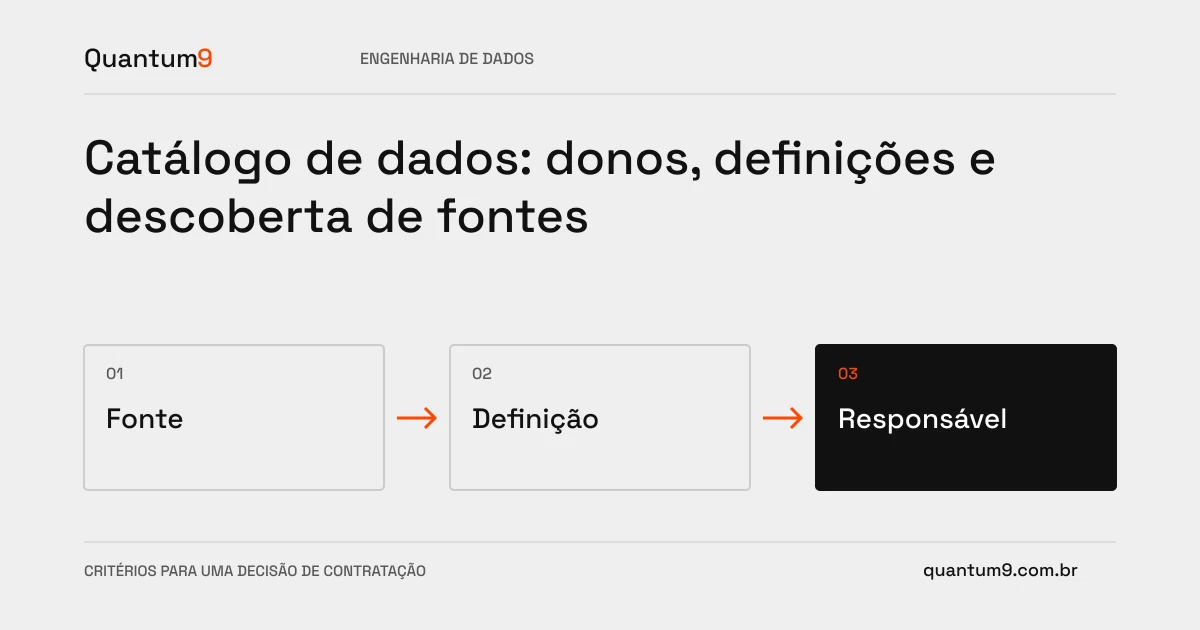
A catalog helps when it allows you to find data and understand whether it serves the decision. Listing tables without definition, responsibility and context usually produces an inventory that is little used.
How to evaluate this decision
Start with a relevant domain, like customers or orders. Document meaning, origin, update, and usage restrictions. Differentiate business definition from technical structure. The catalog must have a maintenance process, as sources and responsible people change. Automating table discovery can help, but does not replace meaning validation by the responsible area.
Criteria for comparing proposals
- Description: record concepts and examples that allow distinguishing similar fields.
- Responsibility: indicate who clarifies, approves and corrects each set.
- Use: inform known quality, frequency and access limits.
A scenario to discuss with the supplier
Hypothetical example: two bases have an active customer field, but one represents a current contract and the other an enabled registration. The catalog must explain the difference to avoid incompatible analyses.
What to validate upon delivery
Ask a new consumer to locate the source of a business question using the catalog. Check if you can understand updates and limitations without relying on informal contacts.
Prepare the conversation about the project
Bring Quantum9 priority domains, sources and responsible parties. The first cycle must demonstrate usefulness in real queries before attempting to catalog the entire organization.
Data engineering · Map the company's priority