
Index
Migrating support requires preserving the ability to continue conversations, not just exporting old messages. Open tickets, responsible parties and channels need a transition strategy.
How to evaluate this decision
Map which data can be exported and imported by the platforms involved. Identify attachments, internal notes, states, and external identifiers. Not every structure will have direct correspondence; define how to consult the history that cannot be incorporated. Plan the cut by channel or team and avoid receiving new messages in two uncoordinated operations.
Criteria for comparing proposals
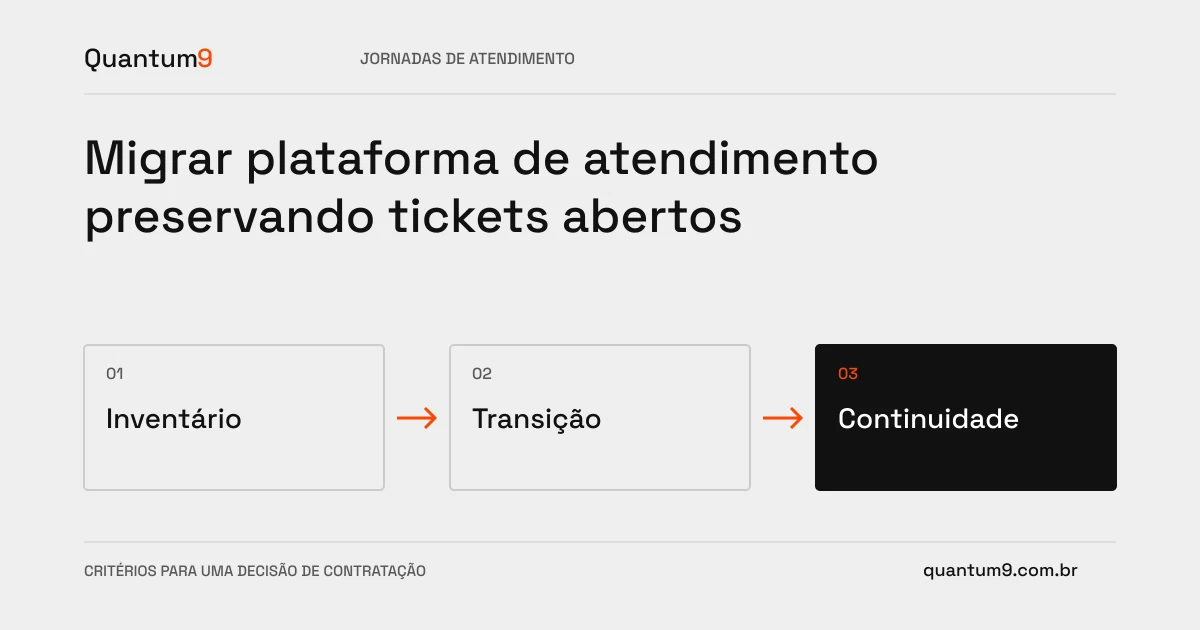
- Inventory: Quantify tickets, attachments, users and known limitations of APIs or exports.
- Transition: choose treatment for open conversations and define when to change channels.
- Conference: compare samples and totals, recording format losses or non-equivalent fields.
A scenario to discuss with the supplier
Hypothetical example: the new platform imports the text, but does not preserve internal notes. These notes cannot be converted into public messages; another controlled target or separate historical query is required.
What to validate upon delivery
Migrate a pilot batch with complex cases and test continuity of responses. Check authorship, order, attachments and access. Only move forward after documenting the differences accepted by the operation.
Prepare the conversation about the project
Quantum9 can plan the migration and develop necessary integrations. Enter export platforms, volumes, channels, and limitations to build a verifiable transition.
Conversational commerce · Map the company's priority