
Index
A chatbot needs to recognize when it cannot complete the demand. Human handoff must preserve context and create real accountability, not just show that someone will respond later.
How to evaluate this decision
Define transfer situations based on user request, uncertainty, business rule or unavailability. Provide times and return expectations based on existing operations. The agent should receive enough summary and history to continue and be able to review what the automation completed. Do not let the bot continue responding in parallel when the conversation is under human assistance.
Criteria for comparing proposals
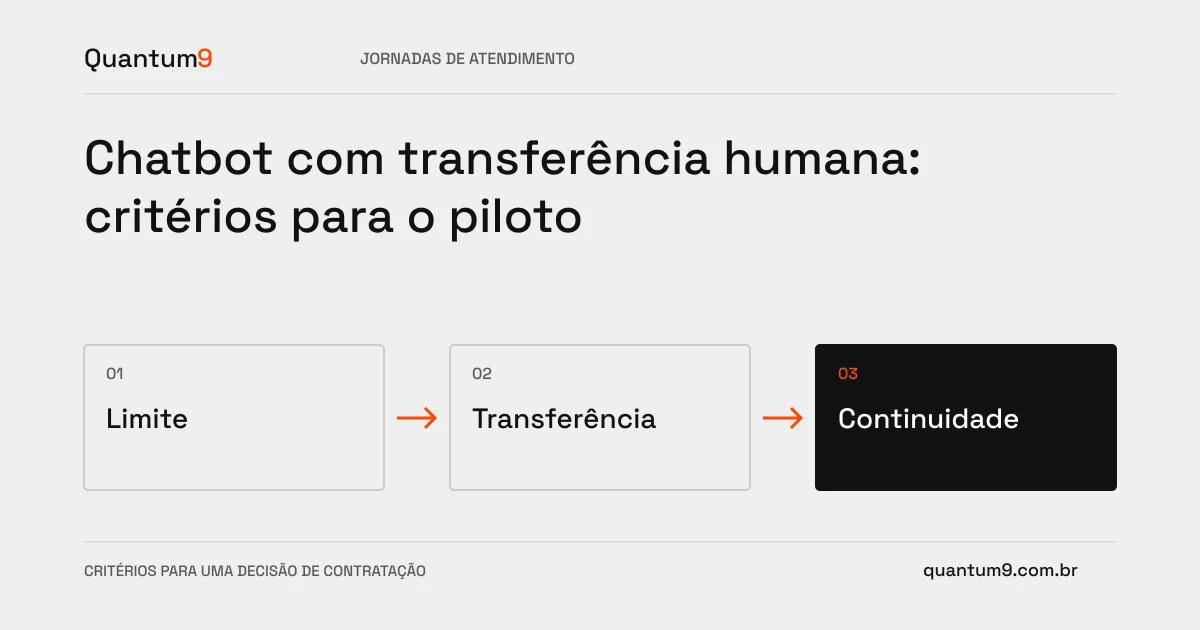
- Triggers: map bot limits and allow accessible output for human assistance.
- Queue: create assignment, priority and alternative when there is no attendant available.
- Resumption: define when automation can resume and which messages should not be repeated.
A scenario to discuss with the supplier
Hypothetical example: the customer explains a problem outside the response base. The bot must forward the question and inform the status of the request, without inventing a solution to avoid the transfer.
What to validate upon delivery
Include in the pilot questions out of scope, irritated user, closed queue and service resumed the next day. Evaluate whether the human can continue without asking for information already provided again.
Prepare the conversation about the project
Quantum9 can implement automation and handoff as per the process. Bring limits of activity, schedules and responsible parties; the quality of the pilot depends on both the human queue and the bot's responses.
Conversational commerce · Map the company's priority