
Index
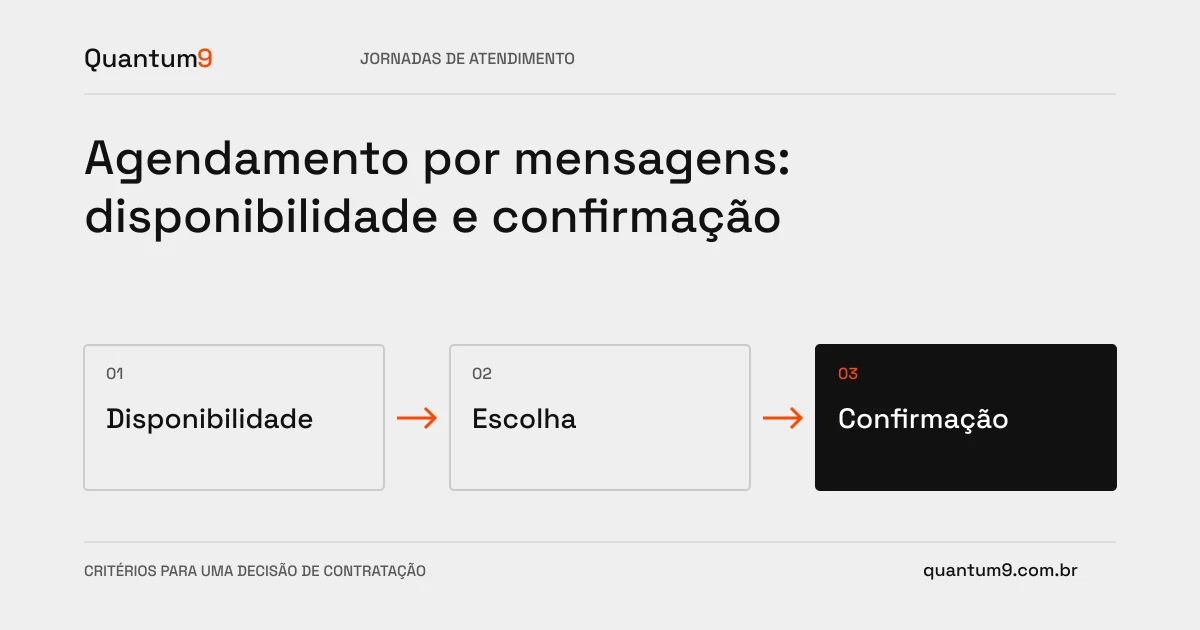
Talking about a time doesn't mean it's booked. Automation needs to query current availability, record confirmation, and handle changes without creating conflicting commitments.
How to evaluate this decision
Define which schedule is the official source and how long a schedule offer can be considered valid. Confirm the reservation in the system before reporting success. Consider duration, resources, time zone, and preparation intervals. If the integration is unavailable, the conversation should forward a pending request rather than promising an unregistered time.
Criteria for comparing proposals
- Consultation: apply service, professional or resource rules before presenting options.
- Confirmation: avoid double bookings when the user repeats the response or the event arrives again.
- Change: link cancellation and rescheduling to the correct appointment, preserving history.
A scenario to discuss with the supplier
Hypothetical example: two people choose the same time presented minutes before. The first confirmation occupies the vacancy; the second needs to receive new options, without misleading confirmation.
What to validate upon delivery
Test competition, delayed response, scheduling error and rescheduling. Check that the final message corresponds to the persisted state and that cancellation does not affect another similar appointment.
Prepare the conversation about the project
Take the agenda used, services, availability rules and examples of exceptions to Quantum9. The scope should include the manual path for cases that the integration cannot complete.
Conversational commerce · Map the company's priority