
Index
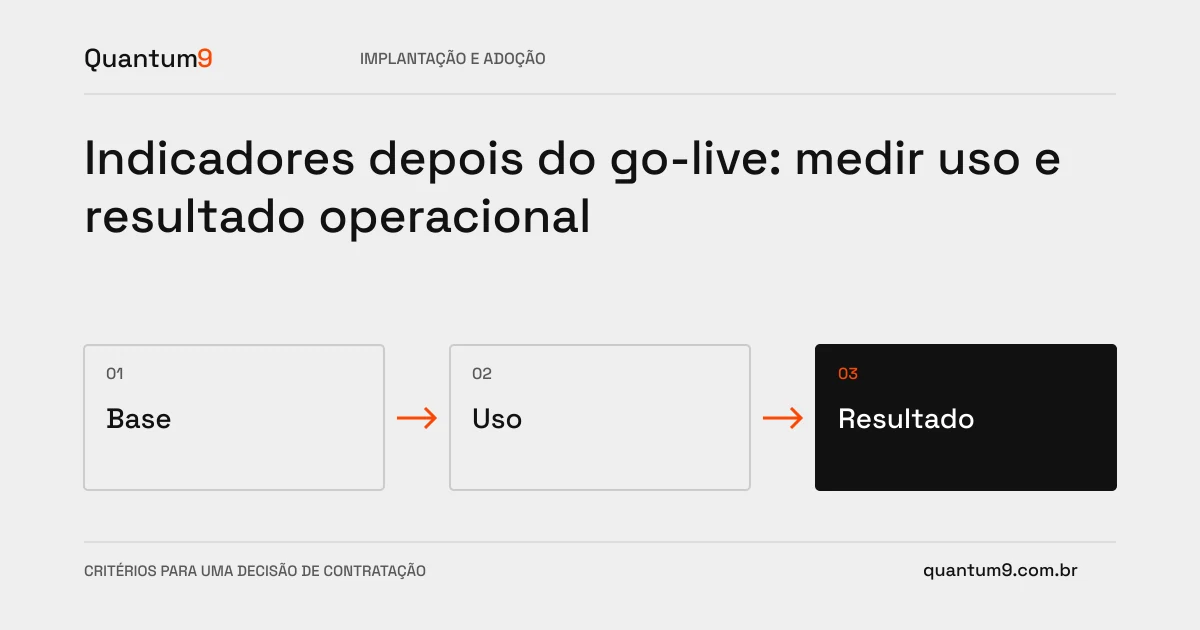
Publishing the system is a delivery milestone, but it does not prove that the business problem has been solved. Post-implementation indicators must relate use, quality and results of the task performed.
How to evaluate this decision
Set a baseline before the change when data is available. Choose a few measures linked to the objective, such as cycle time or need for correction. Record external factors that may influence the comparison. Active use helps interpret adoption, but needs to be combined with task completion and quality of data produced.
Criteria for comparing proposals
- Basis: document origin, period and limitations of the previous measure.
- Result: relate the indicator to the task or problem that motivated the investment.
- Routine: assigning review and decisions when the result does not evolve as expected.
A scenario to discuss with the supplier
Hypothetical example: the volume of requests grows after launch and so does the total queue time. Comparing only the total can hide an improvement per request; the analysis needs to consider volume and composition of the work.
What to validate upon delivery
Check whether the indicators can be reproduced and explained by the operation. Review nonstandard cases and do not automatically attribute every performance change to the software.
Prepare the conversation about the project
Bring Quantum9 objectives and available data. Instrumentation should help decide adjustments after launch, with interpretable indicators and without promising returns that have not yet been demonstrated.
Software evolution and deployment · Map the company's priority