
Index
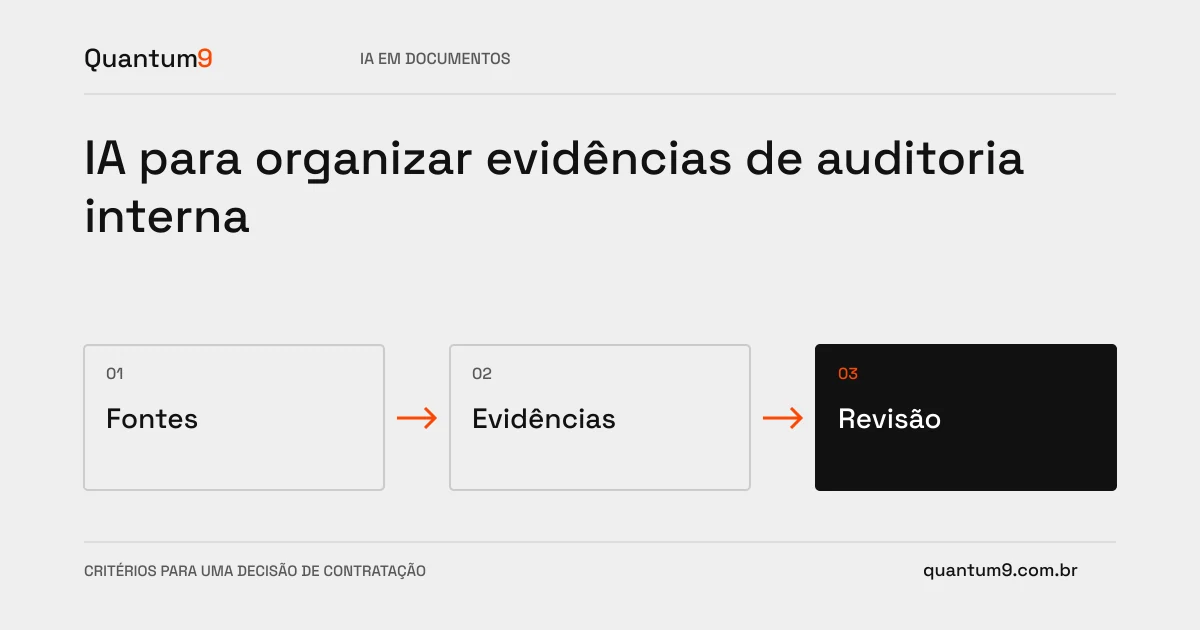
AI can support finding and classifying evidence, but it should not declare that a control has been met without analysis. The result must maintain traceability back to the original document or record.
How to evaluate this decision
Define criteria and periods provided by the responsible area. Relate each piece of evidence to the requirement it can support and record gaps. A document with words similar to the control does not prove its execution. Preserve the context, version, and permissions so the reviewer can assess sufficiency and relevance.
Criteria for comparing proposals
- Inventory: identify sources, period, responsible parties and access restrictions.
- Organization: separate candidate evidence, reviewed and discarded with justification.
- Tracking: keep references and flag incomplete or out-of-date documents.
A scenario to discuss with the supplier
Hypothetical example: a policy describes how an approval should occur, but does not demonstrate that it occurred in a specific operation. The system must distinguish procedure from evidence of execution.
What to validate upon delivery
Compare assisted selection with a manual review on a known set. Test for irrelevant documents and missing evidence, seeing if the tool leaves the gap visible.
Prepare the conversation about the project
Quantum9 can organize document recovery according to the audit script. Bring defined requirements, sources and responsible parties; Compliance conclusions remain the responsibility of the responsible professionals.
AI for processes · Map the company's priority