
Index
An integration that is difficult to explain becomes dependent on who built it. Helpful documentation lets you find rules, handle exceptions, and reproduce the environment without revealing secrets.
How to evaluate this decision
Document the data contract and decisions that are not obvious from the code. Include flow direction, identifiers, transformation, and failure handling. A generic diagram does not explain how an order is reconciled after an interruption. Documentation must accompany what is in production and indicate those responsible for external sources.
Criteria for comparing proposals
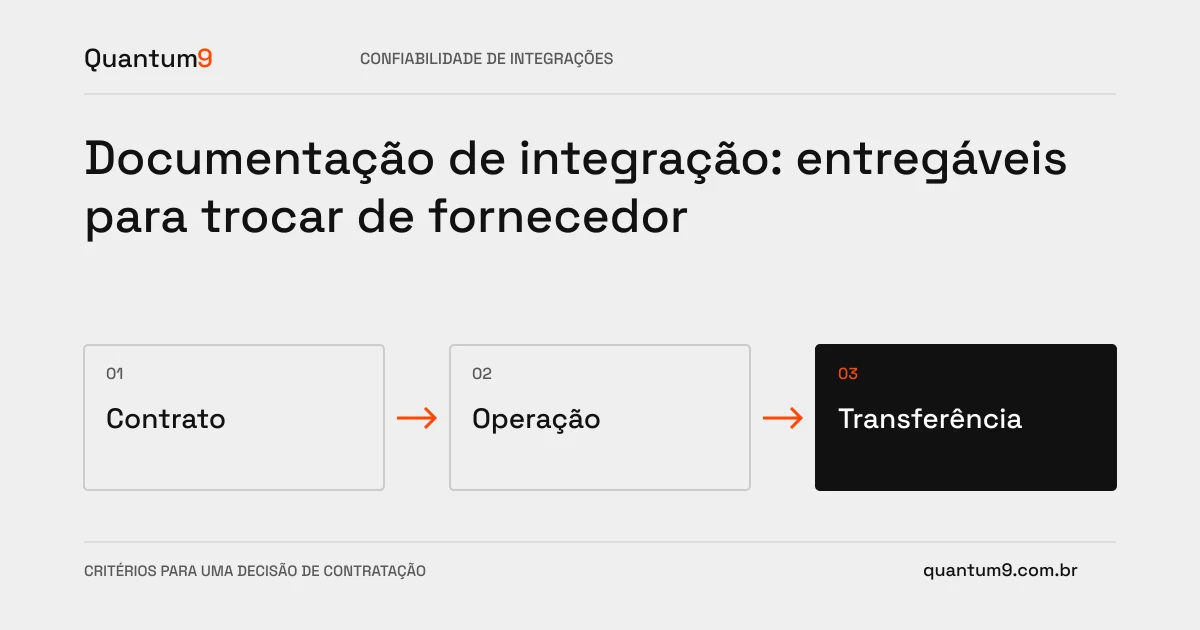
- Functional: describe events, states and correspondence rules between systems.
- Operational: provide diagnostic, reprocessing and reconciliation procedures.
- Technical: record configuration, deployment and testing, referencing secure storage of secrets without copying them.
A scenario to discuss with the supplier
Hypothetical example: another team takes over the integration and needs to recover a rejected batch. The material must allow the cause to be identified and the batch to be safely resumed, without depending on message instructions from the previous supplier.
What to validate upon delivery
Ask someone who hasn't implemented the flow to run a test routine using the documentation. Register doubts and fill in the gaps before considering the delivery completed.
Prepare the conversation about the project
Bring the most frequent integration, operators and maintenance situations to Quantum9. The scope can include documentation and stabilization, preserving what already works.
Integrations and APIs · Map the company's priority