
Agility principles applied to SMEs to reduce risk and increase speed with quality.
Index
Agility beyond ritual
Being agile is learn fast and deliver continuous value. Purposeless rituals only add cost.
1. Outcomes first
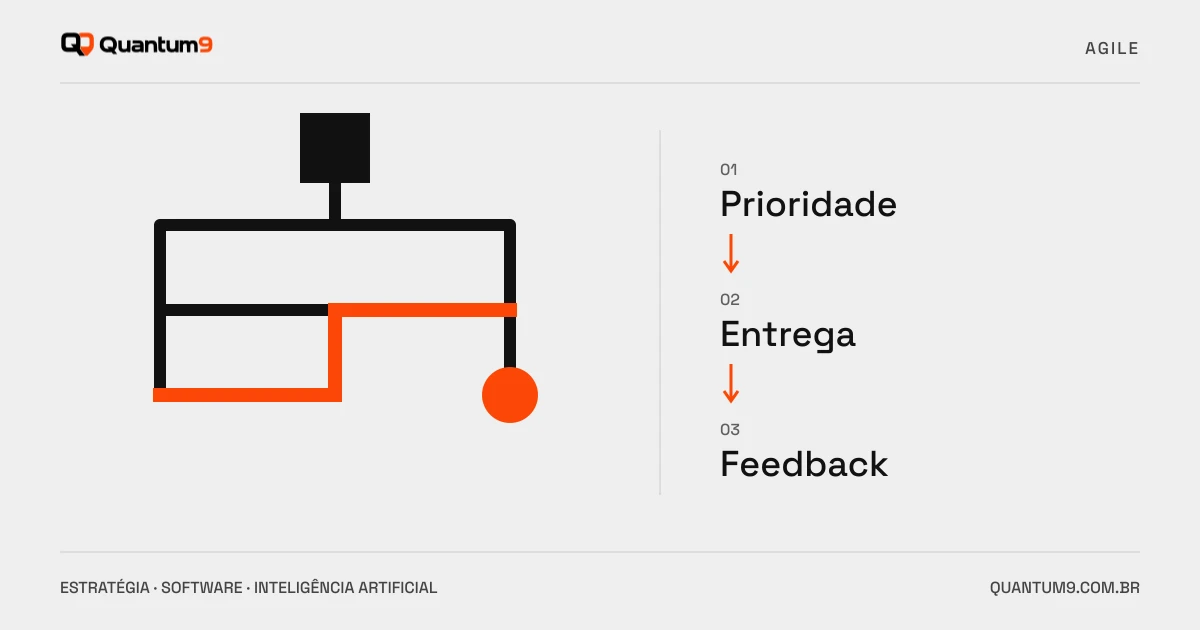
Backlog guided by business metrics (activation, conversion, cost). Each story must have why Of course.
2. Small deliveries
Feature flags, dark launches and frequent releases. Early feedback reduces rework.
3. Integrated quality
Automated testing in critical flow, CI/CD and monitoring. Definition of Done includes telemetry.
4. Autonomy with alignment
Teams with space to decide, aligned with clear direction and restrictions.
Do you want to make your team really agile? We run a diagnosis and suggest practical process adjustments.
How to turn the topic into a hiring decision
Agility is the ability to learn and adjust responsibly, not the absence of planning. A contract can provide for a review of priorities without abandoning cost transparency and acceptance criteria.
What to include in the scope
Define the participation of the business manager, demonstration frequency and how dependencies will be handled. Changes must have an explained impact. The supplier needs to signal when a new priority displaces another delivery.
How to check delivery
Observe whether each cycle produces something verifiable and reduces uncertainty. Meetings and boards do not prove quality. Use operation feedback and flow indicators to improve the process, avoiding comparing teams just on points.