
Index
Testing with representative data does not require indiscriminately copying production. The environment needs to preserve structures useful for testing and reduce the exposure of personal or confidential information.
How to evaluate this decision
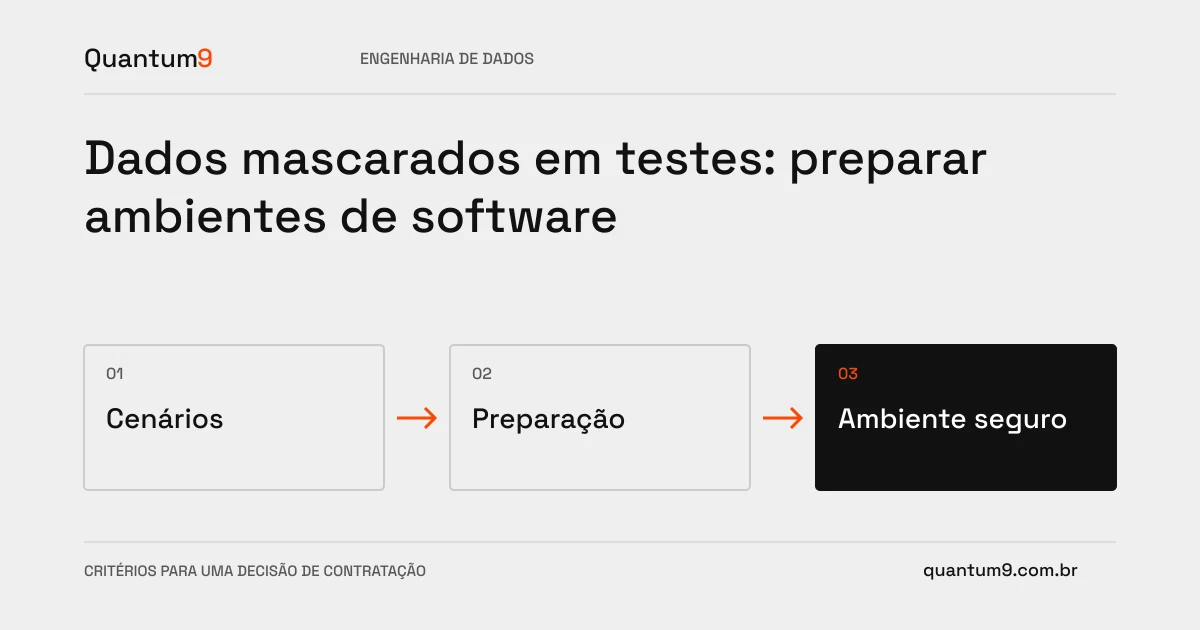
Choose from synthetic data, prepared subsets, and masking techniques depending on your scenario. Changing names without treating documents, attachments and free fields can leave identifiable data. Relationships between records must also remain valid for the test to be useful. Preparation must be repeatable and accompanied by access and retention controls.
Criteria for comparing proposals
- Inventory: locate sensitive fields and files, including data hidden in observations.
- Transformation: maintain referential consistency without preserving unnecessary information.
- Isolation: separate integrations and notifications to prevent contact with real customers.
A scenario to discuss with the supplier
Hypothetical example: the main email is replaced, but an attachment continues to contain customer data. Preparation needs to cover the entire set that will be made available for testing.
What to validate upon delivery
Perform exposure checks and functional scenarios on the prepared foundation. Check that external services are isolated and that the renewal of the environment repeats the controls.
Prepare the conversation about the project
Quantum9 can structure data and test environments according to internal rules. Bring necessary scenarios and classification of information; Privacy requirements must be validated by those responsible for the company.
Data engineering · Map the company's priority