
Index
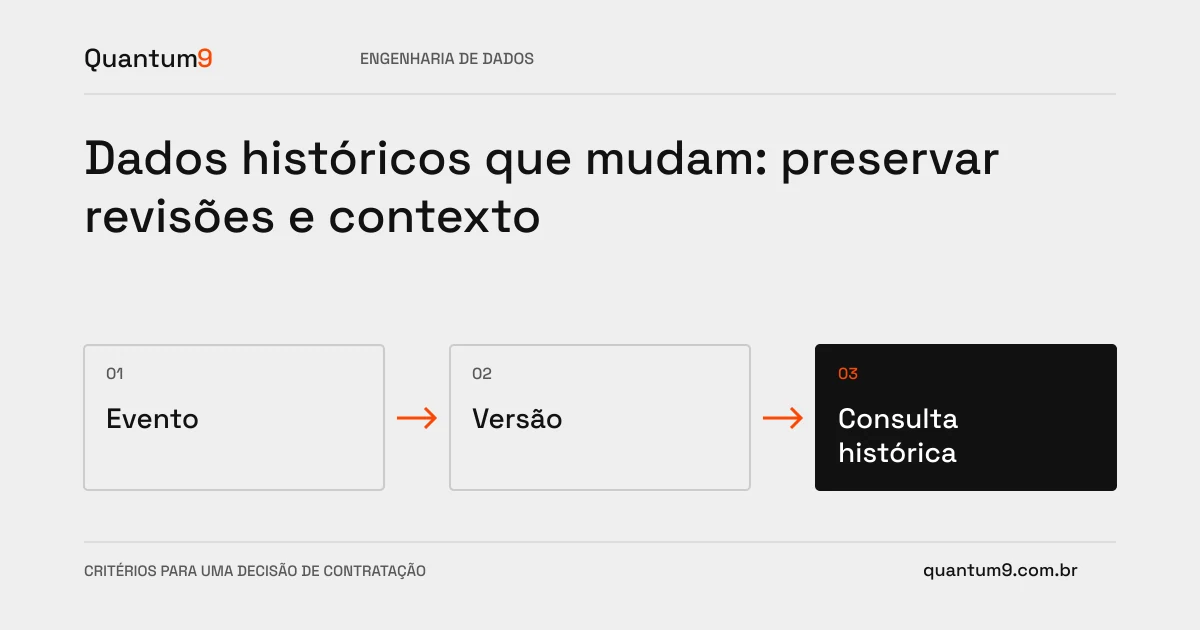
Reports may need to answer both what is known today and what was known at an earlier date. Overwriting historical records prevents distinguishing these two questions.
How to evaluate this decision
Define which attributes require history and which time matters: occurrence, validity or registration in the system. Not every field needs full versioning. Choose the model as decided and document how retroactive corrections will be handled. The source may not provide enough background; This limitation must appear in the proposal and report.
Criteria for comparing proposals
- Semantics: separating real change from the business of correcting incorrect data.
- Version: preserve ranges and avoid undue overlapping of conditions.
- Consultation: offer current and historical reading with clear labels.
A scenario to discuss with the supplier
Hypothetical example: a customer changes segment. A historical report may need to maintain the classification that existed on the sale, while another analysis uses the current segment. Both are valid if the question is explicit.
What to validate upon delivery
Test future change, retroactive correction and query on boundary dates. Check that versions do not duplicate values when entering an aggregated report.
Prepare the conversation about the project
Bring examples of reviews and historical questions to Quantum9. The design must prioritize relevant attributes and explain what can be reconstructed with the available sources.
Data engineering · Map the company's priority