
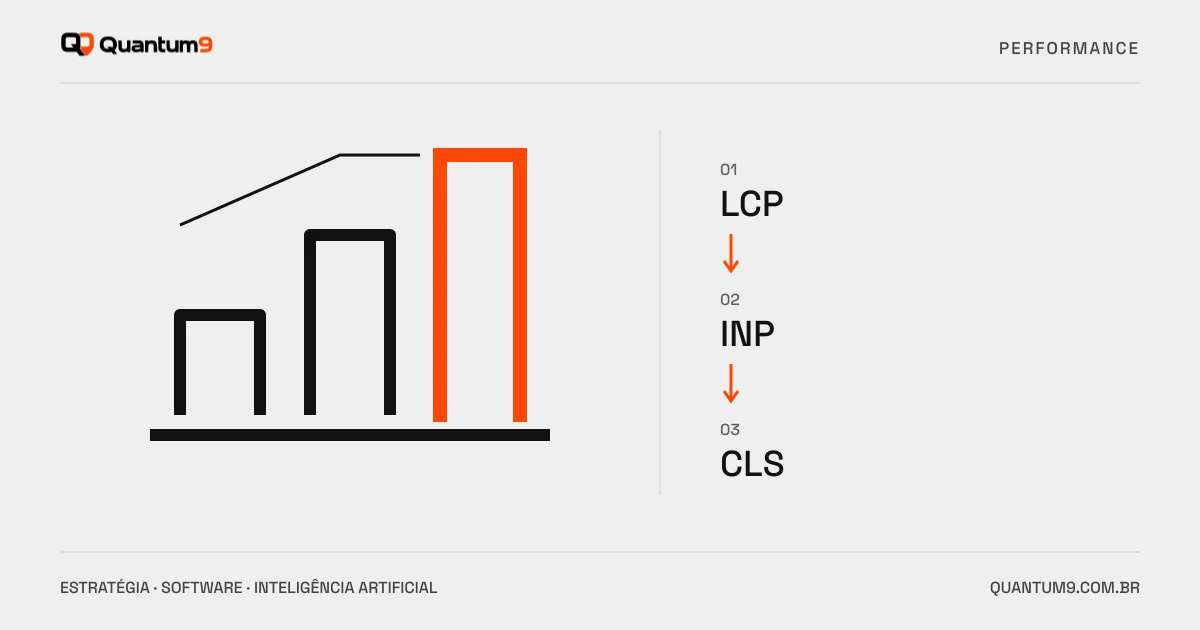
Practical techniques to improve LCP, INP and CLS in modern applications.
Index
Perceived performance that converts
Prioritize LCP with optimized images and edge caching, reduce INP by removing useless JS and defer hydration, control CLS with space reservations and correct fonts.
1. LCP
Serve the main image via CDN/caching, preload critical fonts and avoid blocking.
2. INP
Split bundles, use RSC and passive events. Smart debounce on user inputs.
3. CLS
Fixed dimensions and responsible lazy load. fonts with font-display: swap.
Want a Web Vitals plan? We deliver reports with quick wins and a medium-term roadmap.
How to turn the topic into a hiring decision
Separate laboratory measurement and real user data. A local run of Lighthouse helps find problems, but it does not represent all devices and connections. Prioritize important pages for acquisition and task completion.
What to include in the scope
Investigate the image or block that determines LCP, tasks that delay interactions, and elements that change position. Optimizing everything as a precaution can create complexity for no gain. Reserve media dimensions and avoid loading unused resources on the first screen.
How to check delivery
Compare the same route and conditions before and after. Also check that the form, menu and content are still functional. Reference limits are LCP up to 2.5 s, INP up to 200 ms, and CLS up to 0.1, evaluated at the 75th percentile when there is sufficient field data.
Reference: Web Vitals documentation.