
Index
Two companies may interpret the same field in different ways. A technical data contract defines format and meaning so that integration remains predictable as sources evolve.
How to evaluate this decision
Register mandatory fields, units, identifiers, possible values and rules for missing information. Differentiate technical compatibility from commercial or legal agreements, which require their own responsible parties. Define how changes will be communicated, tested and versioned. A new column can be simple; Changing the meaning of an existing column can compromise decisions without generating a processing error.
Criteria for comparing proposals
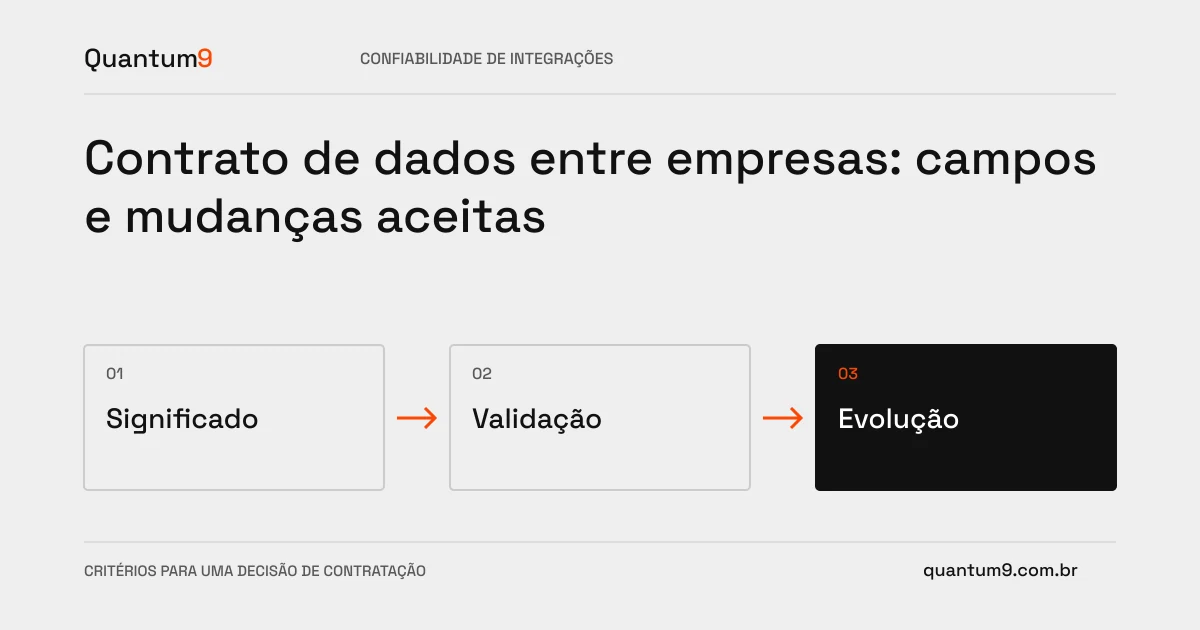
- Semantics: explain what each field represents and when it is valid.
- Quality: establish validations and behavior when faced with incomplete records.
- Evolution: agree in advance, test environment and those responsible for approving changes.
A scenario to discuss with the supplier
Hypothetical example: a partner starts sending weight in another unit while maintaining the same field name. The file remains readable, but the calculations are wrong. Unit and version must be part of the contract.
What to validate upon delivery
Validate samples on both sides and test compatible and incompatible changes. Check for errors pointing to the affected field and rule, allowing for correction without extensive manual investigation.
Prepare the conversation about the project
Quantum9 can specify the technical contract and implement validators. Bring current formats, partner responsibilities and decisions that depend on data to define the operational agreement.
Integrations and APIs · Map the company's priority