
Index
Sharing an entire database may seem simple, but it increases exposure and makes governance difficult. Integration with partners must deliver only the data necessary for the agreed purpose.
How to evaluate this decision
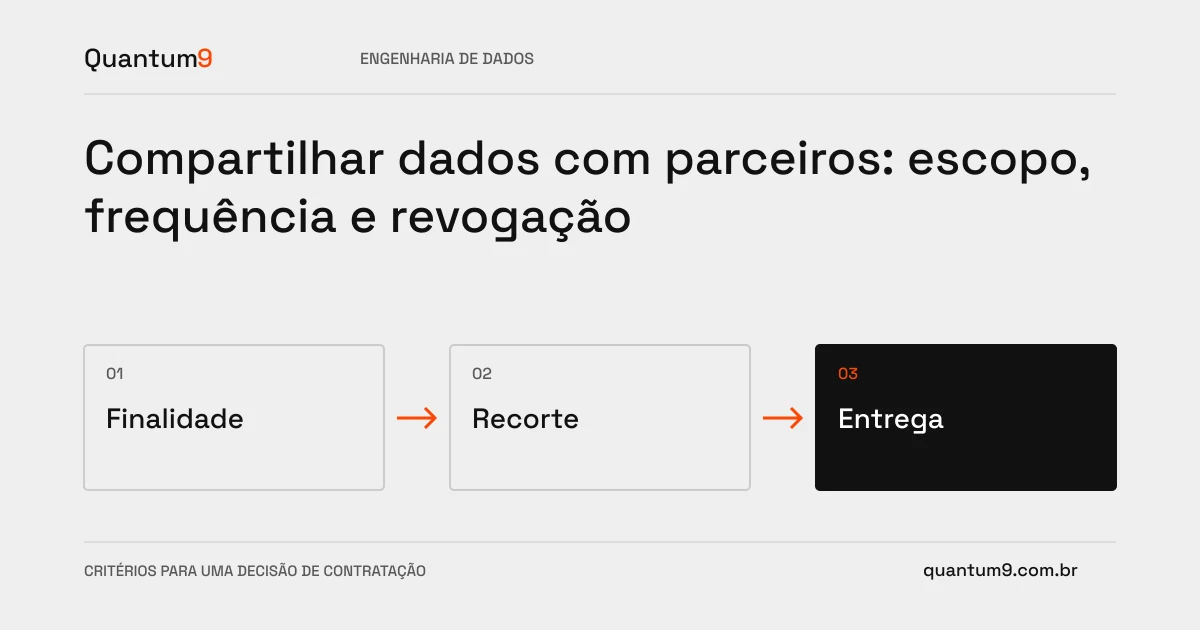
Define fields, frequency, period and recipients. Separate ongoing access from one-off export and consider how changes or revocations will be communicated. A copy already delivered may require its own procedures; Turning off an API does not automatically erase what was received. Usage agreements and legal obligations need to be defined by those responsible, while implementation materializes their controls.
Criteria for comparing proposals
- Scope: relate each field to its purpose and restrict unnecessary data.
- Delivery: record version, period and technical confirmation of shipping.
- Closing: revoke access and carry out agreed procedures for data already shared.
A scenario to discuss with the supplier
Hypothetical example: a partner needs to track orders from a region. The query should limit this set on the server, not send all requests for the partner to filter later.
What to validate upon delivery
Test out-of-scope access, revoked credential, and re-delivery. Check whether the history allows you to identify which set was made available on each occasion.
Prepare the conversation about the project
Inform Quantum9 of the purpose, partner and approved rules. The proposal should define integration, permissions and traceability without assuming that broad sharing is necessary.
Data engineering · Map the company's priority