
Index
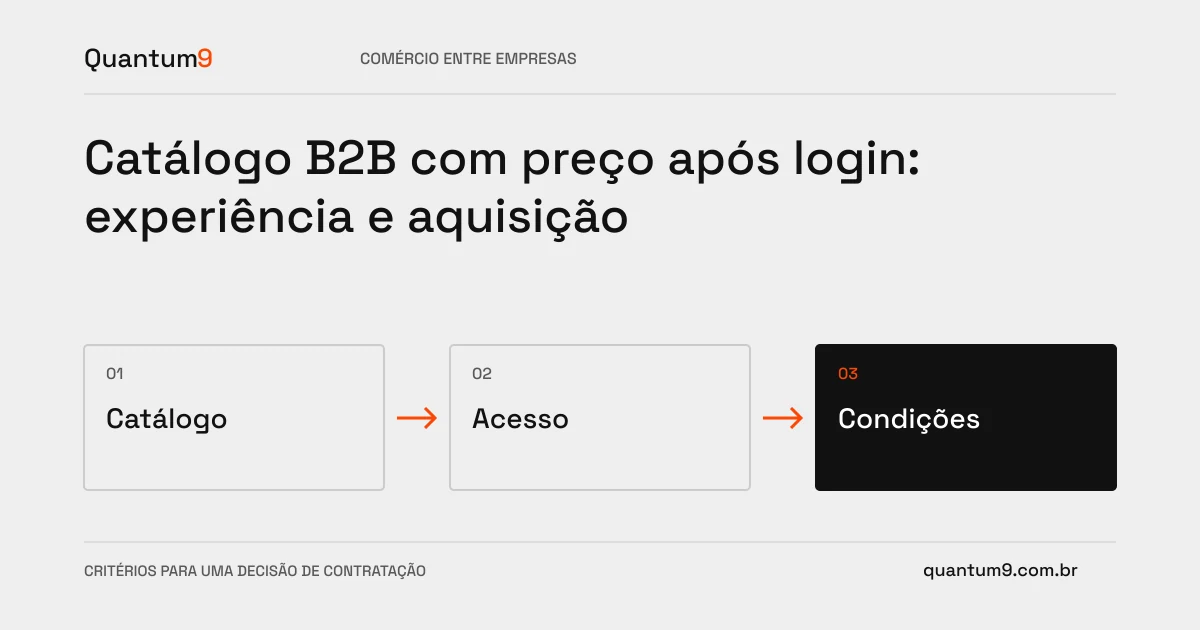
Restricting prices may make sense in negotiated sales, but the visitor still needs to understand the catalog and how to gain access. An empty page before login reduces the ability to evaluate the offer.
How to evaluate this decision
Separate public information and restricted business conditions. Define whether access requires registration, analysis or connection with a company. Don't expose private prices in HTML or APIs while only visually hiding them. Preserve useful public content, such as specifications and applications, when compatible with the business strategy.
Criteria for comparing proposals
- Discovery: explain products and service criteria without requiring registration for all information.
- Access: Make the request and review process understandable.
- Protection: validate authorization on the server and avoid shared caching of private conditions.
A scenario to discuss with the supplier
Hypothetical example: a buyer finds a technical specification on Google and requests conditions for your company. The portal can support this journey without publishing another client's negotiated table.
What to validate upon delivery
Visitor test, pending registration and approved buyer. Check API and cache responses, as well as screen appearance.
Prepare the conversation about the project
Bring public content, access policy and commercial tables to Quantum9. The project must balance discovery and privacy conditions, without promising indexing or traffic just for opening the catalog.
B2B e-commerce · Map the company's priority