
Index
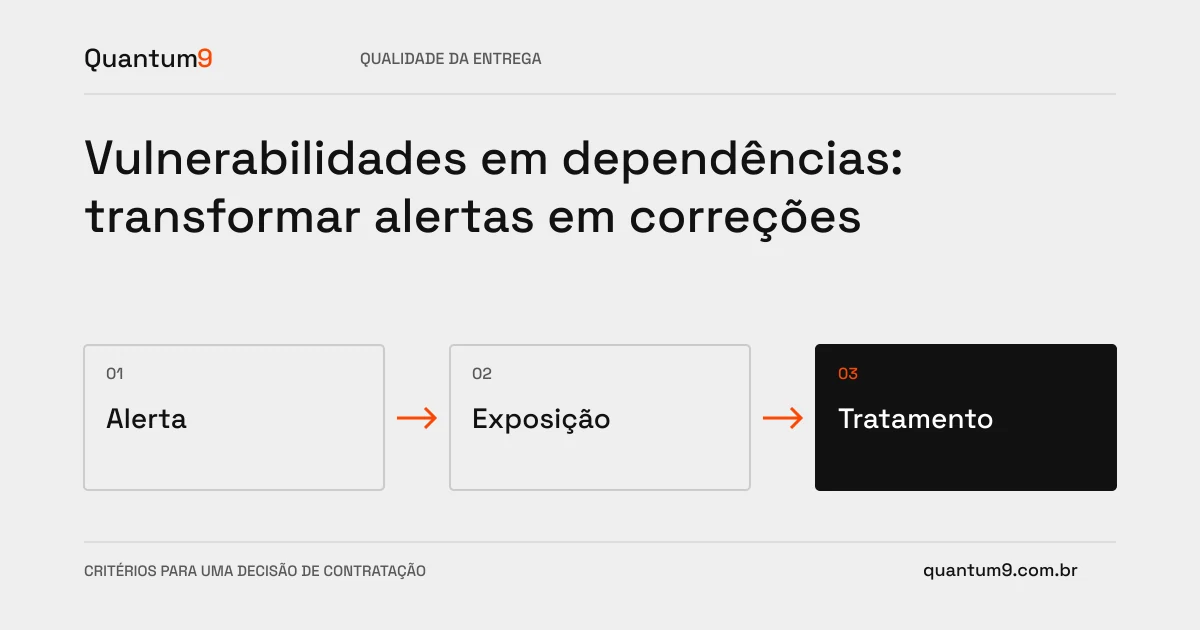
An alert list is not a remediation plan. The team needs to evaluate exposure, affected path, and upgrade feasibility to prioritize product changes.
How to evaluate this decision
Use official sources and appropriate tools to identify affected versions by checking the application context. Published severity and impact on the environment are not the same thing. Record justifications for prioritizing, mitigating or postponing, with responsible and review. Do not treat the absence of alerts as proof of complete security.
Criteria for comparing proposals
- Screening: list component, version, use and known exploitation conditions.
- Treatment: define update, mitigation or additional analysis with an agreed deadline.
- Validation: testing the correction and possible regressions in the affected journeys.
A scenario to discuss with the supplier
Hypothetical example: One vulnerable library appears only in one build tool, while another is in the public data input path. The analysis needs to consider both contexts before ordering the work.
What to validate upon delivery
Confirm effective versions after upgrading and perform relevant checks. Document risks that are still open and the reason for any exceptions.
Prepare the conversation about the project
Quantum9 can integrate fixes into the engineering cycle within the agreed scope. Bring inventory, alerts and execution context; specialized security tests should be separately delimited when necessary.
Software engineering and quality · Map the company's priority